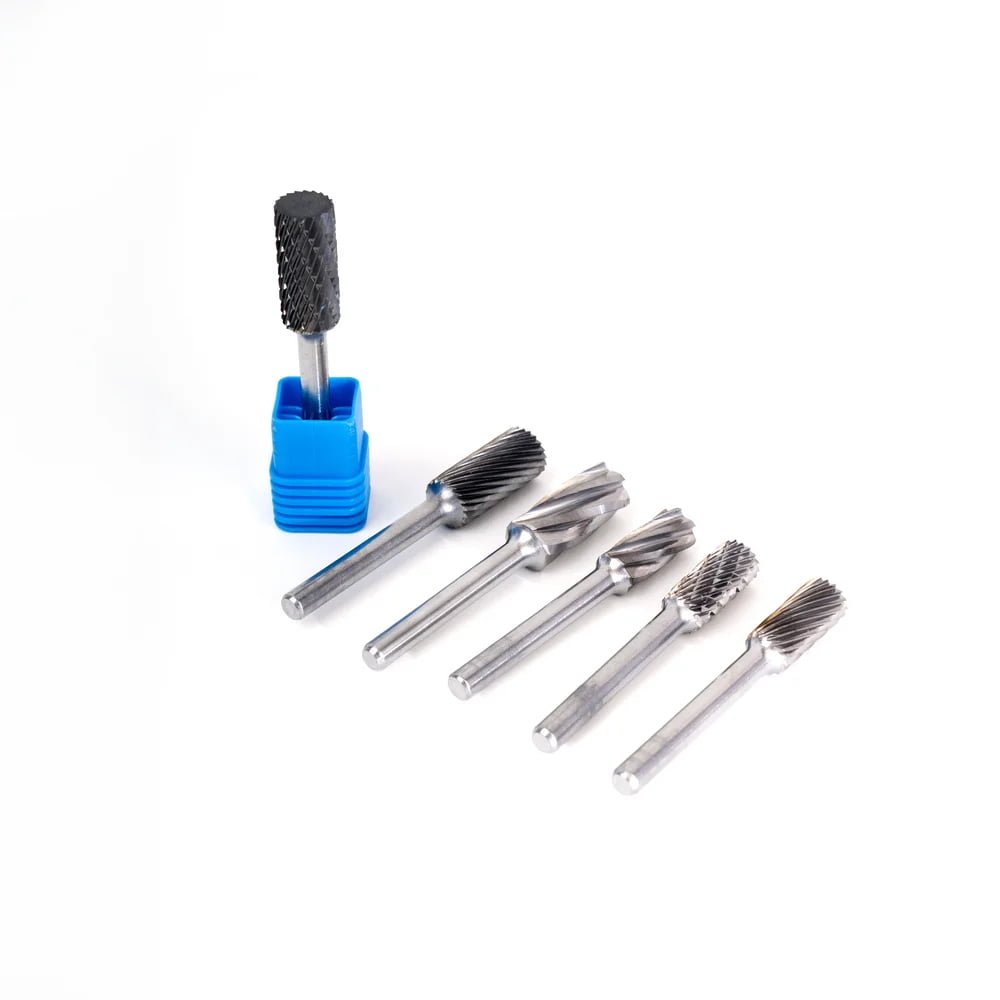
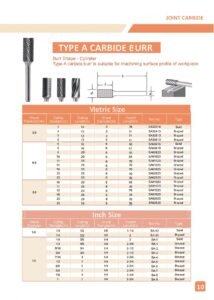
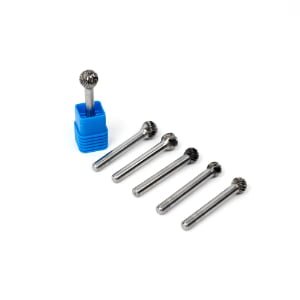
100% pure tungsten carbide raw material. Cutting edges undergo professional hardening and precision honing for exceptional sharpness and long-lasting durability.
Double / MX Cut
Ideal for machining stainless steel and high-temperature resistant alloys. Cross-hatch pattern removes material efficiently while reducing heat buildup.
R-Shape Shank
Enlarged welding area greatly enhances impact resistance. Made of premium 40Cr steel. Compatible with 1/4" collet rotary tools for firm, stable clamping.
Welding Process
Flat-bottom solid welding with 50% silver-content sandwich silver solder. Large, gap-free area. Low-temperature welding prevents damage to tungsten carbide blanks.
SUPERIOR HARDNESS
HRA 90.3-91.5
Outstanding wear resistance
DAILY CAPACITY
30,000+
Pieces per day
CNC MACHINES
418
5-axis precision
Standard Cut Types
CUT MX
Double Cut / MX Cut
Suitable for machining stainless steel, steel with hardness less than HRC60, and high-temperature-resistant materials.
CUT M
Single Cut
Suitable for machining cast iron, steel and stainless steel with hardness less than HRC60.
CUT AL
Aluminium Cut
Suitable for machining aluminium, aluminium alloys, non-ferrous metals and plastics.
Special Cut Types
CUT C
Coarse Cut
Suitable for fine machining of soft metals, non-ferrous metals, steel and cast iron.
CUT F
Fine Cut
Suitable for fine machining of cast iron, steel with hardness less than HRC60 and stainless steel.
CUT D
Diamond Cut
Suitable for fine machining of all materials with hardness less than HRC60.
CUT MR
Chip Breaker Cut
Suitable for machining stainless steel, steel and cast iron.
CUT SX
Steel Cut
Suitable for steel and cast iron machining with better chip evacuation.
CUT INOX
INOX Cut
Suitable for stainless steel and soft titanium alloys.
Use Cases
Deburring and edge finishing
Surface preparation and smoothing
Weld grinding and cleanup
Porting and polishing
Engraving and carving details
Industries Served
Automotive
Aerospace
Mold & Die
Metalworking
Shipbuilding
Medical Devices
Defense & Military
Tool Manufacturing
Power Plants
Railway
Foundries
Renewable Energy
Jewelry
Construction
Prototyping
Heavy Equipment
Recommendations for Use
Choose appropriate rotational speed before grinding
Select suitable burr shape, diameter and cut type for material
Confirm shank and chuck are connected firmly before use
Avoid excessive pressure -- high heat shortens burr lifespan
Slow down machine if burrs get stuck in the material
Do not use burrs in combustible gas environments
Wear protective glasses and gloves before grinding
Choose correct cut type for the applied material hardness
01
Choose Device
Select your grinder or rotary tool type and power rating.
02
Applied Material
Identify the material: steel, stainless, aluminium, cast iron, etc.
03
Operating Speed
Match RPM range to burr size and material requirements.
04
Burr Shape
Choose from cylinder, ball, tree, cone, flame, and more.
05
Cut Type
Select standard or special cut based on material and finish.
06
Cut Diameter
Choose standard cut diameter matching your workpiece.
07
Shank Diameter
Standard 1/4" (6.35mm) or 6mm for most applications.
08
Shank Type
R-shape or standard based on impact resistance needs.
09
Shank Length
Customize shank length for deep-reach applications.
10
Contact Us
Our team will confirm specifications and provide a quote.
Not sure which carbide burr is right for your application? Our experts are ready to help you find the perfect match.