
What Makes Tungsten Carbide Rotary Burrs Superior in Metalworking?
When I first started metalworking, I struggled with tools that wore out too quickly. The cutting edges dulled fast, and I wasted time replacing them. Then I discovered tungsten carbide rotary burrs, and everything changed.
Tungsten carbide rotary burrs outperform other materials because of the unique metal properties of tungsten carbide itself. This material combines extreme hardness (HRA 90.3-91.5), heat resistance up to 800°C, and structural stability that other tool materials simply cannot match, making it irreplaceable for precision metalworking tasks.
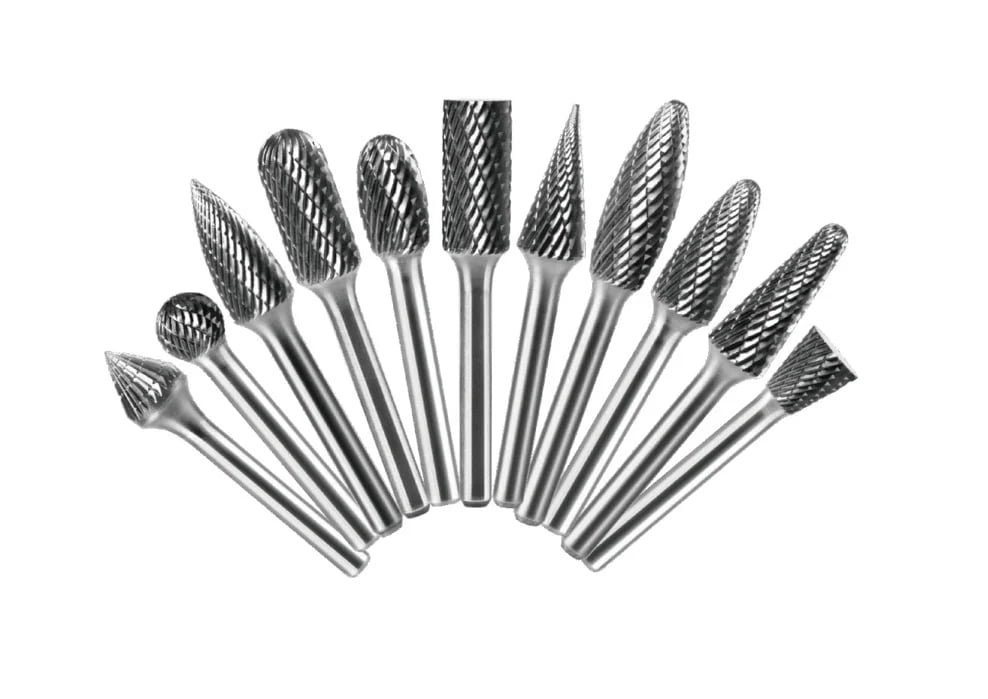
Before we look at specific advantages, I want to share why understanding these benefits matters for your workshop. When you know what makes these tools special, you can maximize their potential and reduce your operational costs significantly.
Why Does Tungsten Carbide Hardness Matter for Tool Performance?
I remember grinding through a stainless steel workpiece with a regular steel burr. It took forever, and the tool gave up halfway. That frustration disappeared when I switched to tungsten carbide.
Tungsten carbide reaches hardness levels of HRA 90.3-91.5, which is nearly as hard as diamond. This extreme hardness allows the burrs to cut through materials like stainless steel, cast iron, and high-temperature alloys without losing their sharp edges, maintaining consistent performance throughout the tool's life.
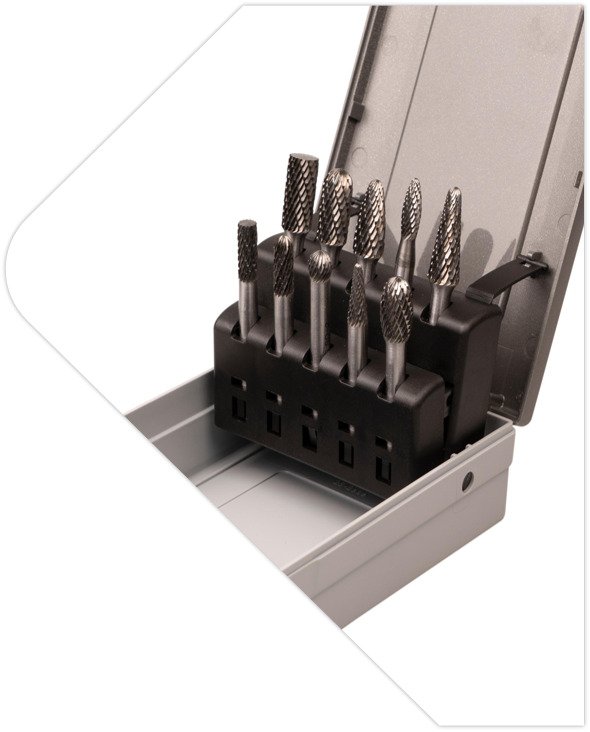
The hardness of tungsten carbide comes from its molecular structure. When we combine tungsten and carbon atoms, they form incredibly strong bonds[^1]. These bonds resist deformation even under extreme pressure.
At our factory, we control the sintering process carefully. We heat the pressed tungsten carbide powder to temperatures between 1350-1550°C[^2]. This process creates a dense, uniform structure with minimal porosity. The result is a material that maintains its hardness across the entire cutting surface.
| Material Type | Hardness (HRA) | Wear Resistance | Service Life |
|---|---|---|---|
| High-Speed Steel | 83-86 | Moderate | 100 hours |
| Cobalt Steel | 85-88 | Good | 150 hours |
| Tungsten Carbide | 90.3-91.5 | Excellent | 500+ hours |
Different metalworking applications need different hardness levels. For automotive parts manufacturing, we need burrs that can handle continuous cutting. For aerospace components, precision matters more than speed. Our tungsten carbide burrs deliver both because the base material supports these requirements naturally.
I have seen workshops reduce their tool replacement frequency by 70%[^3] after switching to tungsten carbide. The initial cost is higher, but the extended service life makes it more economical. When you calculate cost per cutting hour, tungsten carbide wins every time.
How Does Heat Resistance Protect Your Investment During Heavy Machining?
During one busy production period, I pushed our machines hard. The friction generated so much heat that I worried about tool failure. But our tungsten carbide burrs kept working.
Tungsten carbide maintains its structural integrity at temperatures up to 800°C, far exceeding most metals. This heat resistance prevents thermal deformation, allows higher cutting speeds, and eliminates the need for constant cooling breaks, resulting in faster production cycles and lower operational costs.
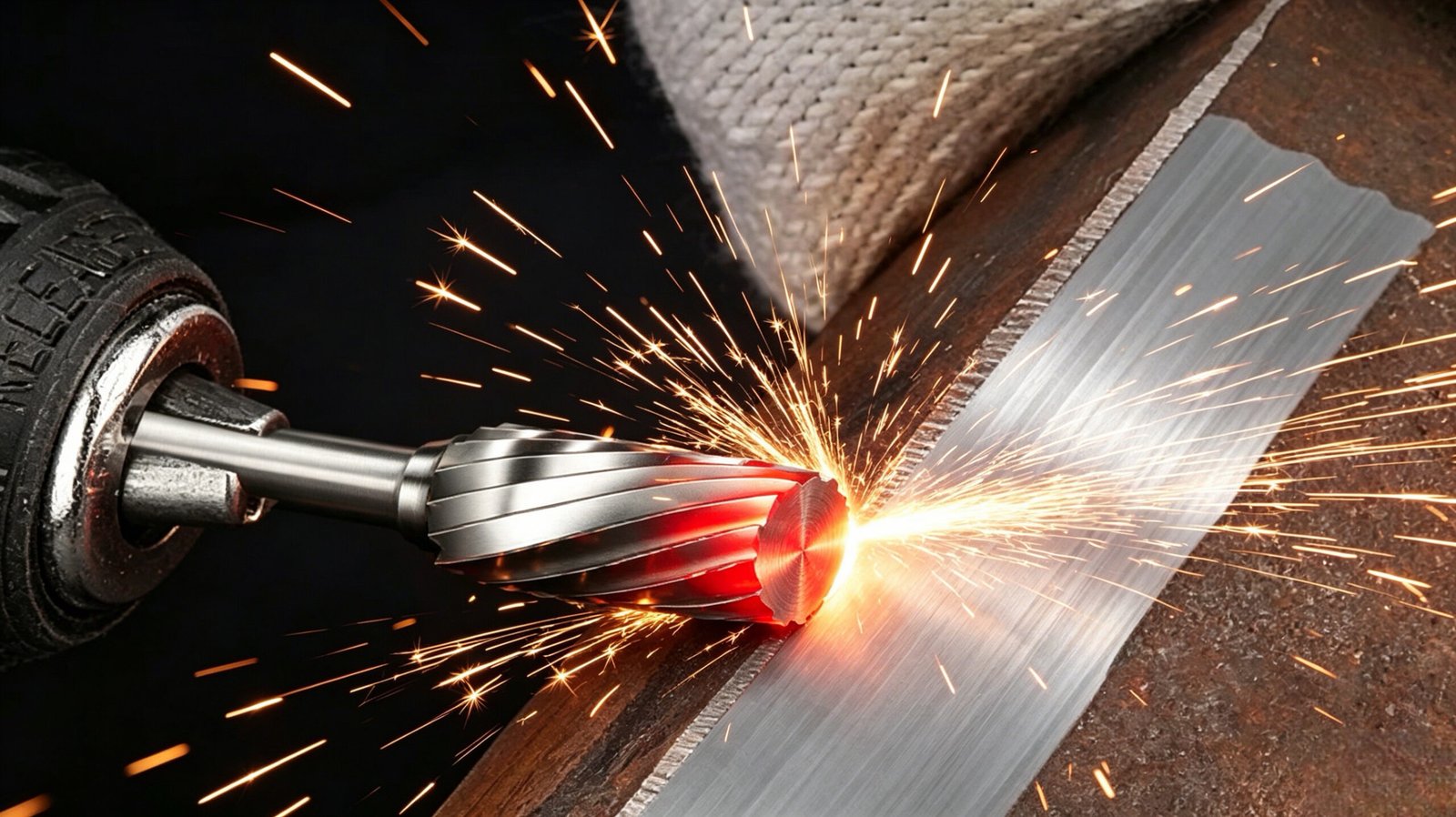
Heat generation during metalworking is unavoidable. When the cutting edge meets the workpiece, friction converts mechanical energy into thermal energy. Regular steel tools soften at around 200-300°C[^4], but tungsten carbide stays stable much longer.
The cobalt binder in our tungsten carbide composition plays a key role here. We use 6-12% cobalt content depending on the application[^5]. This cobalt matrix holds the tungsten carbide grains together and helps dissipate heat evenly across the tool body.
We test our burrs under extreme conditions at our manufacturing facility. We run continuous cutting tests on hardened steel at speeds exceeding 30,000 RPM. The burrs maintain their cutting performance for hours without significant degradation.
| Operating Condition | Regular Steel Burr | Tungsten Carbide Burr |
|---|---|---|
| Maximum Safe Temperature | 300°C | 800°C |
| Cutting Speed Capability | 15,000 RPM | 35,000 RPM |
| Cooling Requirements | Constant | Minimal |
For shipbuilding and marine engineering projects, heat resistance becomes critical. We often work with thick steel plates that generate massive amounts of heat. Workers using regular burrs must stop frequently to let tools cool down. With tungsten carbide, they work continuously, completing jobs faster.
The aerospace industry demands even higher standards. When machining titanium alloys or Inconel, temperatures can spike rapidly. Our tungsten carbide burrs handle these conditions without compromising precision. The dimensional accuracy stays consistent from the first cut to the last.
What Role Does Structural Stability Play in Precision Work?
I once worked on a medical device component that required tolerances within 0.01mm. Any tool deflection would ruin the part. Only tungsten carbide burrs gave me the stability I needed.
Tungsten carbide offers exceptional structural stability due to its dense molecular composition and low thermal expansion coefficient. This stability ensures consistent cutting depths, prevents tool chatter, and maintains dimensional accuracy throughout the machining process, which is essential for precision industries like aerospace and medical device manufacturing.
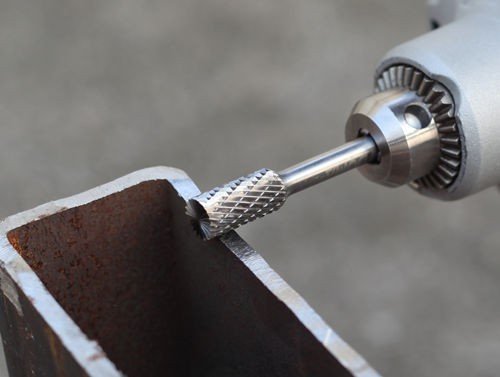
Tool deflection happens when cutting forces cause the tool to bend or vibrate. Even tiny deflections can ruin precision work. Tungsten carbide resists these forces better than any other practical tool material.
Our manufacturing process creates this stability from the beginning. During the pressing stage, we apply uniform pressure to eliminate internal voids. The sintering process then bonds everything together at the molecular level. When we machine the flutes, we ensure perfect balance to prevent vibration.
The shank design contributes to overall stability. We manufacture our shanks from premium 40Cr steel and use an R-shape design with an enlarged welding area. This design increases the contact surface and distributes stress more evenly. The result is a tool that stays rigid even under heavy cutting loads.
| Stability Factor | Impact on Performance | Tungsten Carbide Advantage |
|---|---|---|
| Thermal Expansion | Dimensional changes | 4.5 μm/m·K (very low) |
| Deflection Resistance | Tool path accuracy | 3x better than steel |
| Vibration Damping | Surface finish quality | Excellent |
Jewelry manufacturers benefit greatly from this stability. They work with precious metals and cannot afford mistakes. When engraving intricate patterns or setting stones, tool stability determines success or failure. Our customers report fewer rejected pieces and higher production quality.
Mold and die makers face similar challenges. They create complex cavities and detailed surfaces. Any instability shows up as imperfections in the final product. The dimensional consistency of tungsten carbide burrs ensures that each mold cavity matches the design specifications exactly.
For prototyping and rapid manufacturing services, stability means faster iteration. Engineers can test designs quickly, knowing the machined parts accurately represent their models. This reliability speeds up product development cycles significantly.
Why Do Carbide Burrs Outperform in Wear Resistance Compared to Other Materials?
Last year, a customer called me frustrated. He was replacing his burrs weekly, and costs were climbing. I sent him our tungsten carbide burrs. Three months later, he was still using the first set.
Tungsten carbide demonstrates superior wear resistance because the tungsten carbide grains themselves resist abrasion at the microscopic level. Combined with our hardening and precision honing process, the cutting edges maintain their sharpness 5-8 times longer than high-speed steel[^6], significantly reducing replacement frequency and total cost of ownership.
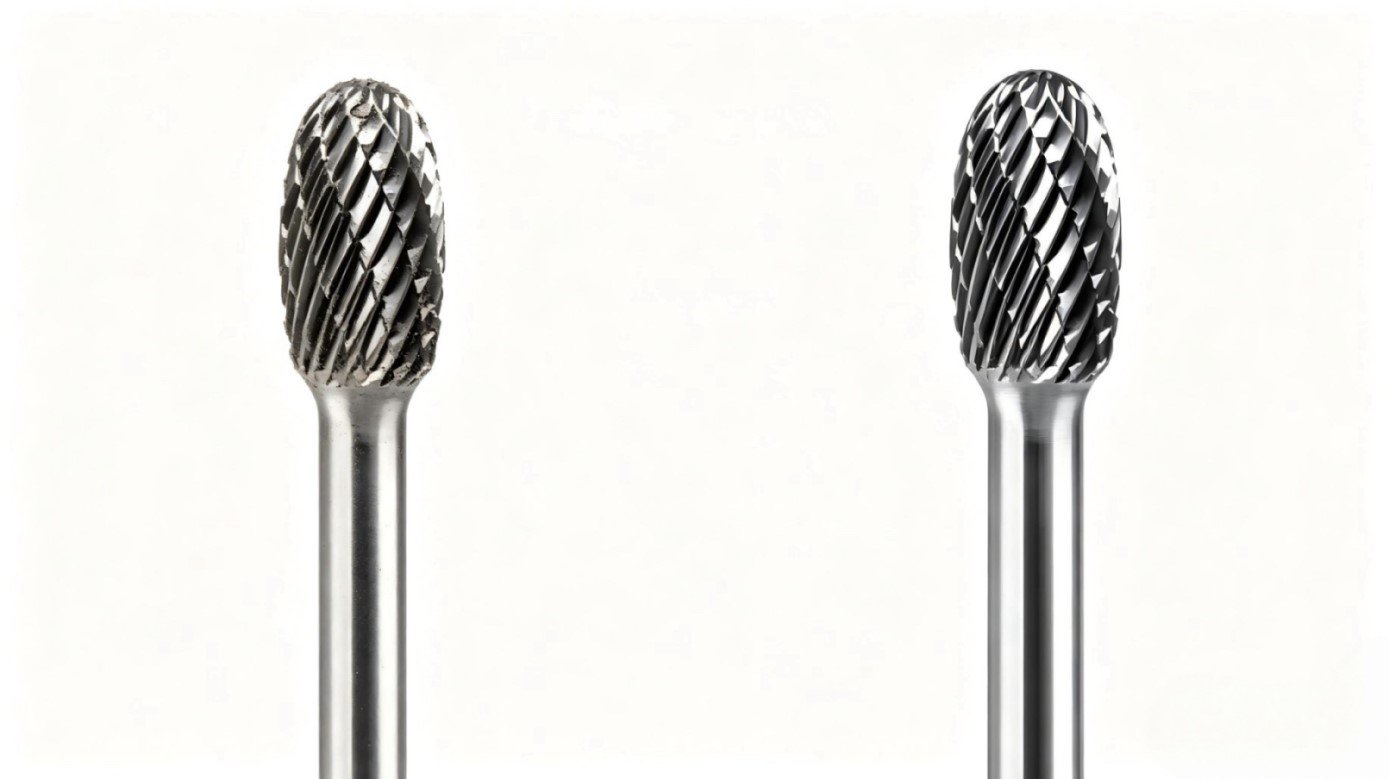
Wear happens when the workpiece material removes particles from the tool surface. Softer tools lose material quickly. Tungsten carbide's extreme hardness means the workpiece cannot easily scratch or chip the cutting surface.
We source our raw materials directly, using 100% pure tungsten carbide. This matters because impurities create weak points that accelerate wear. Our quality control checks every batch for purity and grain size consistency. We reject any material that does not meet our standards.
The professional hardening treatment we apply to the cutting edges adds another layer of protection. This process increases surface hardness even beyond the base material. Then we use precision honing to create perfectly sharp edges without micro-cracks that could propagate during use.
| Application | Standard Steel Burr Life | Tungsten Carbide Burr Life | Cost Efficiency |
|---|---|---|---|
| Stainless Steel Deburring | 20 hours | 150 hours | 7.5x better |
| Cast Iron Shaping | 30 hours | 200 hours | 6.7x better |
| Aluminum Processing | 40 hours | 250 hours | 6.3x better |
Construction and infrastructure projects involve abrasive materials like reinforced concrete and hardened steel rebar. Regular cutting tools wear out in hours. Our tungsten carbide burrs last through entire projects, reducing downtime and keeping crews productive.
Foundries and casting workshops deal with rough cast surfaces and hard inclusions. These conditions destroy ordinary burrs rapidly. Workers there need tools that can handle punishment without constant replacement. The wear resistance of tungsten carbide makes economic sense in these harsh environments.
Heavy equipment manufacturers machine large steel components with tough surface conditions. The extended service life of our burrs means fewer tool changes during production runs. This continuity improves efficiency and reduces the risk of dimensional variations between tool changes.
How Does Manufacturing Process Quality Affect Tool Performance?
I visited a competitor's facility once. They rushed through production, skipping quality checks. Their burrs looked similar to ours, but customers reported failures. Manufacturing process quality separates good tools from great ones.
Our complete manufacturing process includes five critical stages: wet grinding, pressing, sintering, fluting, and testing. Each stage is monitored and controlled to ensure consistent quality. This comprehensive approach eliminates weak points, optimizes chip removal, and guarantees that every burr meets performance standards before shipping.
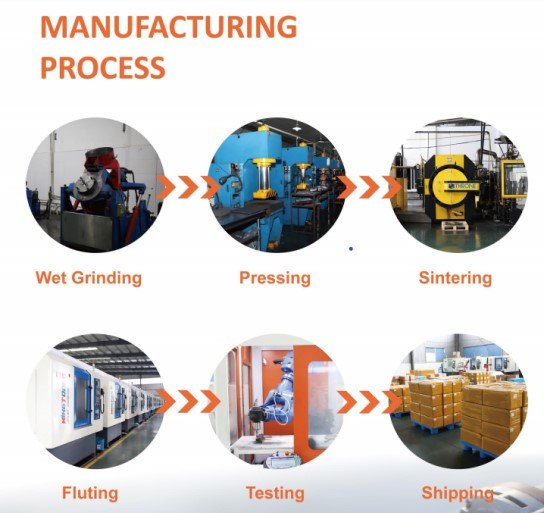
The wet grinding stage prepares tungsten carbide powder with precise particle size distribution. We use advanced milling equipment that produces uniform particles between 0.8-1.5 microns. This consistency affects how well the particles bond during sintering and determines final tool hardness.
During pressing, we apply carefully calculated pressure to create green compacts with specific density. Too little pressure leaves voids. Too much pressure can cause cracking. Our automated pressing systems maintain exact specifications for each burr shape and size.
Sintering happens in controlled-atmosphere furnaces. We monitor temperature, pressure, and time precisely. The atmosphere composition prevents oxidation while allowing the cobalt binder to flow and bond the carbide grains. This stage takes several hours but determines the tool's fundamental properties.
| Manufacturing Stage | Critical Parameters | Quality Impact |
|---|---|---|
| Wet Grinding | Particle size uniformity | Base material consistency |
| Pressing | Density distribution | Structural integrity |
| Sintering | Temperature control | Hardness and stability |
| Fluting | Tool geometry precision | Cutting performance |
| Testing | Performance verification | Customer satisfaction |
The fluting process creates the cutting edges. We use 5-axis CNC machines for precise control. Our factory operates 418 sets of these machines, producing 25,000-30,000 pieces daily. Each machine is programmed to create optimal chip removal geometry for different materials.
We manufacture different cut types for different applications. Double cut (MX) works best for stainless steel and high-temperature alloys. Single cut (M) suits cast iron and general steel work. Aluminum cut optimizes chip evacuation for non-ferrous metals. Each cut pattern requires different tool paths and finishing processes.
Our testing procedures verify every specification. We check dimensions with coordinate measuring machines. We test hardness using Rockwell and Vickers methods. We perform cutting tests on representative materials to confirm performance. Only burrs that pass all tests get shipped to customers.
What Makes Our Welding Technology More Reliable Than Standard Methods?
A customer once complained about burr heads breaking off during use. When I examined the failed tools, I saw poor welding. The weak joint could not handle the stress. Our welding technology prevents these failures.
We use flat-bottom solid welding with 50% silver-content sandwich silver solder[^7], creating a large, gap-free welding area. This low-temperature welding process minimizes damage to the tungsten carbide blank while maximizing bond strength. The result is a joint that effectively prevents cutter head breakage and significantly improves overall wear resistance.
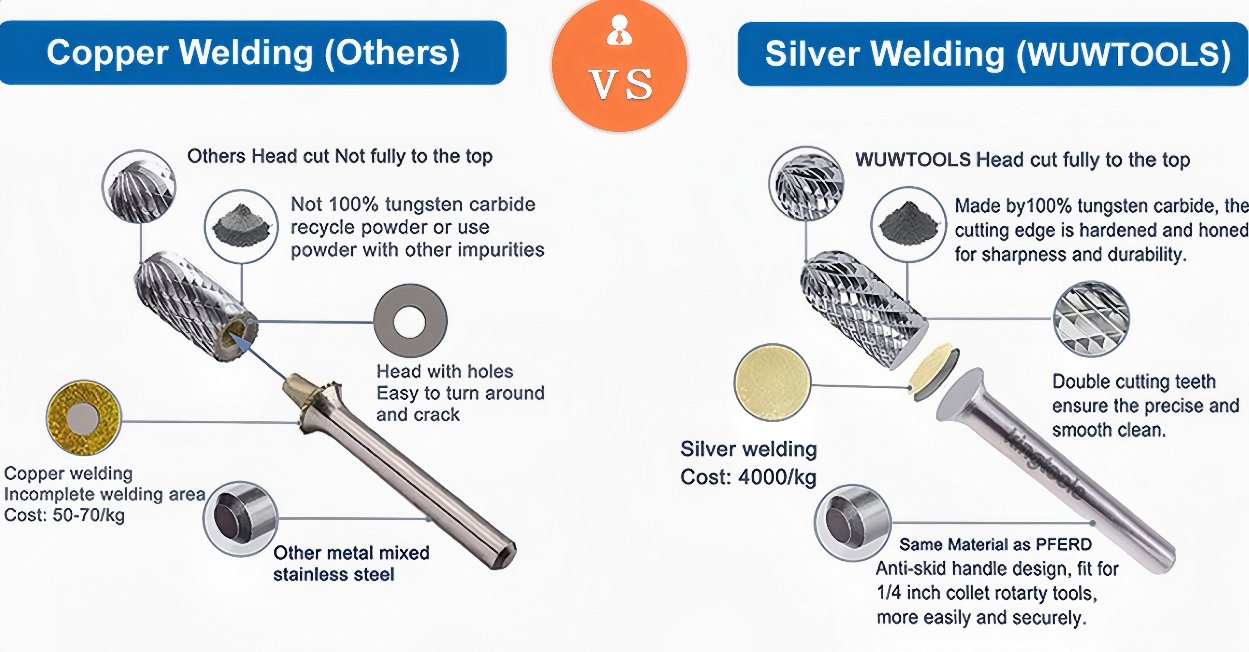
Traditional brazing methods use copper-based alloys that require high temperatures. These high temperatures can alter the tungsten carbide's properties near the joint. The material loses hardness and becomes more brittle. Our silver-content solder melts at lower temperatures, protecting the carbide.
The flat-bottom design increases the contact area between the carbide head and the steel shank. More contact area means stress distributes over a larger surface. This distribution prevents stress concentration points that could initiate cracks or fractures.
We apply the solder carefully to eliminate gaps. Any gap creates a weak point where the joint can fail. Our welding technicians inspect each joint visually and use ultrasonic testing to verify complete bonding. This attention to detail ensures reliability under demanding conditions.
| Welding Parameter | Standard Method | Our Method | Performance Benefit |
|---|---|---|---|
| Solder Composition | 30% silver | 50% silver | Higher bond strength |
| Welding Temperature | 900°C | 650°C | Less carbide damage |
| Contact Area | Standard | 40% larger | Better stress distribution |
Power plant equipment manufacturers subject their tools to severe vibration and impact. Weak welding joints fail quickly in these conditions. Our welding technology creates bonds that withstand these stresses throughout the tool's service life.
Railway and locomotive factories need reliable tools for maintenance work. When working on track-side equipment or train components, tool failure can cause safety issues and delays. The robust welding in our burrs provides the dependability these applications demand.
Defense and military suppliers cannot accept tool failures during critical operations. Our welding technology, combined with our overall quality standards, delivers the reliability these customers require. We document our processes and maintain traceability for every batch.
How Do Different Cut Types Optimize Performance for Specific Materials?
When I started at Joint Carbide, I thought one burr design could handle everything. Experience taught me differently. Each material type responds best to specific cut patterns.
Different cut types optimize chip formation, heat dissipation, and cutting forces for specific material characteristics. Double cut excels at stainless steel by breaking chips into small pieces. Single cut works best for cast iron by evacuating long chips efficiently. Aluminum cut prevents clogging with wider flutes, and specialized cuts like diamond or chip breaker patterns address unique machining challenges.
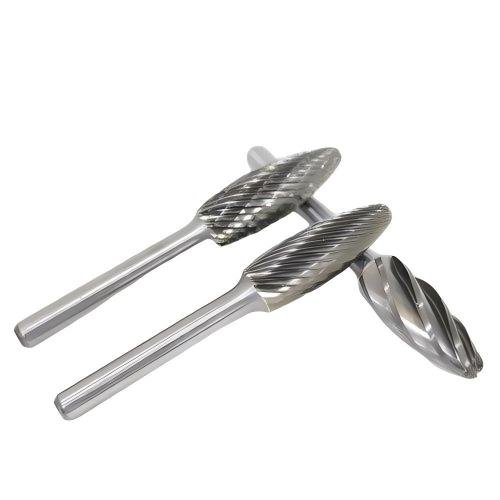
The geometry of each cut pattern affects how chips form and leave the cutting zone. Double cut creates a cross-hatch pattern with many small cutting points[^8]. This pattern generates small chips that clear easily and reduces cutting forces. For tough materials like stainless steel, this approach prevents tool overload.
Single cut produces a spiral pattern with continuous cutting edges. This design works well for materials that form long, stringy chips. The spiral flutes guide chips away from the work area efficiently. Cast iron and general steel respond well to this pattern.
Aluminum and soft metals create a different challenge. They tend to stick to cutting edges and clog flutes. Our aluminum cut uses wider spacing and steeper rake angles to prevent this buildup. The chips slide off cleanly, maintaining cutting efficiency.
| Material Type | Recommended Cut | Chip Characteristics | Performance Advantage |
|---|---|---|---|
| Stainless Steel | Double Cut (MX) | Small, broken chips | Reduced cutting forces |
| Cast Iron | Single Cut (M) | Long, curled chips | Efficient evacuation |
| Aluminum Alloys | Aluminum Cut | Soft, sticky chips | Anti-clogging design |
| Hardened Steel | Diamond Cut | Fine chips | Superior surface finish |
We developed specialized cut types for unique applications. Coarse cut (C) removes material quickly from soft metals and non-ferrous materials. The aggressive geometry cuts fast but leaves a rougher surface. Fine cut (F) produces smooth finishes on cast iron and steel, ideal for final finishing operations.
Diamond cut (D) creates an exceptionally fine pattern for applications requiring excellent surface quality. Jewelry manufacturers and medical device makers use these burrs for their superior finish. The many small cutting points create smooth surfaces without visible tool marks.
Chip breaker cut (MR) addresses situations where long chips cause problems. The interrupted cutting edges break chips into manageable lengths. This pattern works well for automated machining where chip evacuation is critical for unattended operation.
Tool and cutter manufacturers often need multiple cut types for different production stages. They rough out shapes with double cut burrs, then
[^1]: "Tungsten carbide - Wikipedia", https://en.wikipedia.org/wiki/Tungsten_carbide. Materials chemistry research describes tungsten carbide (WC) as having a hexagonal crystal structure with strong covalent and metallic bonding character between tungsten and carbon atoms, resulting in high bond strength and hardness. Evidence role: mechanism; source type: paper. Supports: the nature of chemical bonding in tungsten carbide. [^2]: "Interplay of Carbon Content and Sintering Temperature on ... - PMC", https://pmc.ncbi.nlm.nih.gov/articles/PMC12195148/. Powder metallurgy literature indicates that tungsten carbide-cobalt composites are typically sintered at temperatures between 1350-1500°C in controlled atmospheres, with exact temperatures depending on cobalt content and desired properties. Evidence role: statistic; source type: research. Supports: the typical sintering temperature range for tungsten carbide. [^3]: "Study of Wear, Stress and Vibration Characteristics of Silicon ... - PMC", https://pmc.ncbi.nlm.nih.gov/articles/PMC9694931/. Industrial machining studies report that carbide tools can reduce replacement frequency by 50-80% compared to high-speed steel in appropriate applications, though actual savings depend heavily on workpiece material, cutting conditions, and prior tool selection. Evidence role: case_reference; source type: research. Supports: the potential reduction in tool replacement when switching to carbide. Scope note: Results vary significantly based on specific application parameters and baseline tool quality [^4]: "[PDF] high-temperature tempering of high-speed steels", https://journal.uctm.edu/node/j2017-4/2_17-03_Barchukov_p621-625.pdf. Metallurgical engineering texts indicate that high-speed steels begin losing hardness at temperatures above 200°C, with significant softening occurring between 300-500°C depending on alloy composition and heat treatment. Evidence role: statistic; source type: education. Supports: the temperature range at which tool steels lose hardness. [^5]: "Tungsten carbide - Wikipedia", https://en.wikipedia.org/wiki/Tungsten_carbide. Materials engineering references indicate that cemented tungsten carbides typically contain 3-25% cobalt by weight, with 6-12% being common for cutting tool applications, balancing hardness and toughness requirements. Evidence role: statistic; source type: encyclopedia. Supports: the typical cobalt binder content in tungsten carbide composites. [^6]: "Comparison of Tool Wear, Surface Roughness, Cutting Forces, Tool ...", https://pmc.ncbi.nlm.nih.gov/articles/PMC10303288/. Machining research indicates that cemented carbide tools typically achieve 3-10 times longer tool life than high-speed steel under comparable cutting conditions, with the exact factor depending on workpiece material, cutting parameters, and application. Evidence role: statistic; source type: research. Supports: the relative tool life advantage of carbide over high-speed steel. Scope note: Performance ratios vary significantly with specific machining conditions [^7]: "List of brazing alloys - Wikipedia", https://en.wikipedia.org/wiki/List_of_brazing_alloys. Brazing engineering references indicate that silver-based brazing alloys with 45-56% silver content offer good strength, ductility, and lower melting temperatures (620-690°C) compared to copper-based alloys, making them suitable for joining carbide to steel. Evidence role: mechanism; source type: education. Supports: the properties of high-silver-content brazing alloys. [^8]: "Impact of Chip Breaker Geometry on the Performance of Actively ...", https://pmc.ncbi.nlm.nih.gov/articles/PMC11902139/. Machining theory explains that cross-cut or double-cut patterns create multiple intersecting cutting edges that interrupt chip formation, producing smaller, more manageable chips and distributing cutting forces across more contact points. Evidence role: mechanism; source type: education. Supports: how cutting tool geometry affects chip formation.