
Technological Innovations and Trends in Tungsten Carbide Tools
I've spent the last decade watching carbide tooling evolve from simple cutting implements into sophisticated precision instruments. The factories I work with aren't just buying tools anymore—they're investing in technology that determines whether their automated production lines stay competitive or fall behind. When a procurement manager asks me about the latest tungsten carbide innovations, they're really asking: "Will this investment still matter in three years when our competitors upgrade their CNC machines?"
The tungsten carbide tool industry is experiencing rapid technological transformation through advanced coating technologies, AI-driven manufacturing processes, micro-grain carbide formulations, and smart tool integration with Industry 4.0[^1] systems. These innovations are extending tool life by 40-60%, improving surface finish quality by up to 30%[^2], and enabling previously impossible machining operations in aerospace-grade materials and medical device manufacturing.
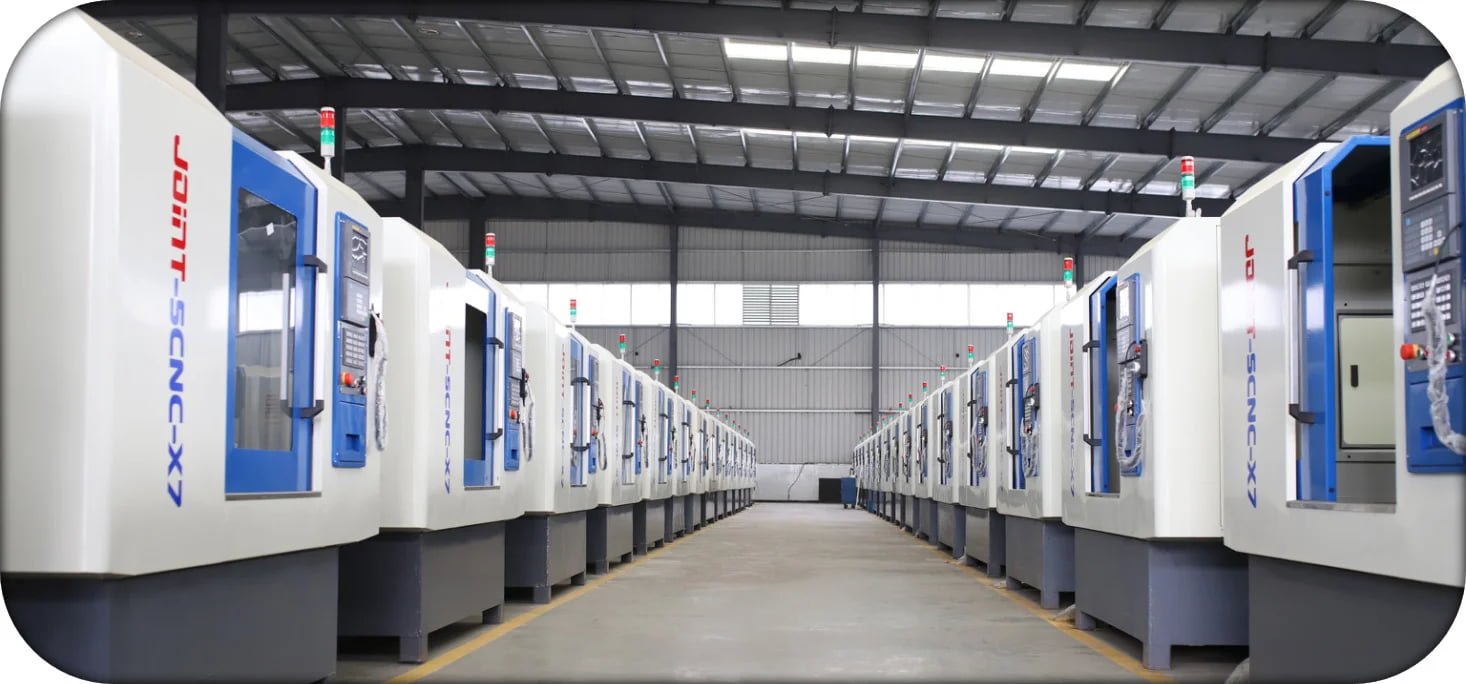
This isn't just about sharper edges or harder materials—though those matter tremendously. The real story lies in how these technological advances reshape your entire manufacturing strategy, from equipment selection to operator training to quality control protocols. Let me walk you through what's actually changing on the factory floor.
What Are the Latest Coating Technologies for Carbide Tools?
The coating on a carbide tool determines whether it performs acceptably or exceptionally. I've tested tools with identical substrate compositions that performed dramatically differently based solely on their surface treatment.
Modern carbide tools now feature multi-layer nanocoatings like TiAlN, AlCrN, and diamond-like carbon (DLC) that increase hardness to HV 3000-4000, reduce friction coefficients to 0.2-0.4[^3], and extend tool life 3-5 times compared to uncoated tools. These coatings enable dry machining, reduce thermal degradation, and maintain dimensional accuracy even at cutting speeds exceeding 400 m/min.
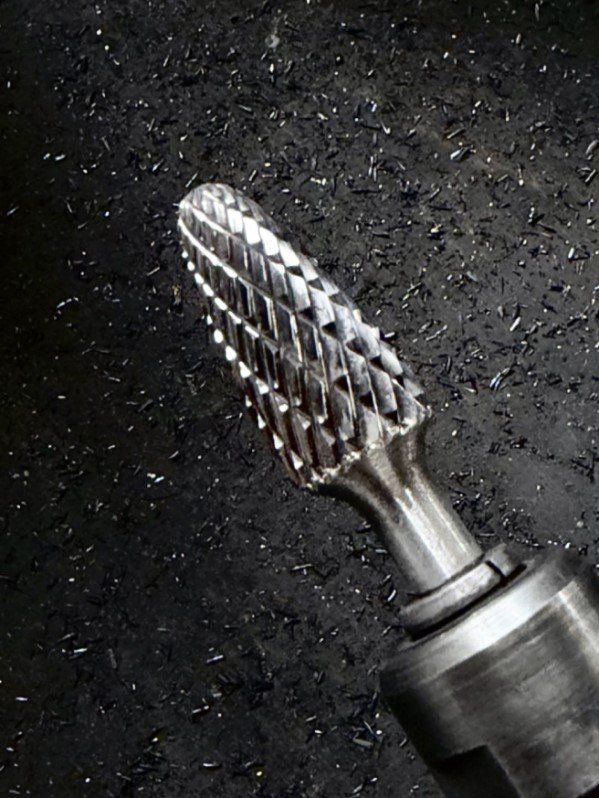
The coating revolution happening right now fundamentally changes how we approach tool selection and application. Physical vapor deposition (PVD) and chemical vapor deposition (CVD)[^4] technologies have matured to the point where we can engineer coating properties with remarkable precision.
PVD vs CVD Coating Technologies
The manufacturing method dramatically influences coating performance:
| Coating Type | Process Temperature | Typical Hardness | Best Applications | Service Life Extension |
|---|---|---|---|---|
| PVD Coatings | 450-600°C | HV 2500-3500 | Precision cutting, sharp edges required | 3-4x |
| CVD Coatings | 800-1050°C | HV 2000-3000 | Heavy interrupted cuts, rough machining | 4-6x |
| PCVD (Plasma CVD) | 400-700°C | HV 3000-4000 | Complex geometries, heat-sensitive substrates | 3-5x |
PVD coatings excel when you need sharp cutting edges maintained. The lower process temperature prevents substrate softening, making PVD ideal for carbide burrs, micro-drills, and precision cutting tools. I recommend PVD for customers machining aluminum alloys, plastics, and composite materials where edge sharpness directly determines surface finish.
CVD coatings handle interrupted cuts and abrasive materials better. The higher deposition temperature creates exceptional adhesion between coating layers. When Joint Carbide manufactures carbide burrs for heavy steel grinding applications, CVD coatings withstand the thermal cycling and mechanical shock that would delaminate thinner PVD layers.
Advanced Multi-Layer Coating Architectures
Single-layer coatings are becoming obsolete in demanding applications. Modern multi-layer systems combine different materials to optimize multiple performance characteristics:
- TiAlN base layers provide excellent hot hardness and oxidation resistance up to 800°C
- AlCrN intermediate layers add corrosion resistance and thermal stability for stainless steel machining
- DLC top layers minimize friction and prevent built-up edge formation
The gradient coating structures I've seen from leading manufacturers transition smoothly between layers, eliminating the interface stress concentrations that cause premature coating failure. This matters enormously when you're pushing cutting parameters to maximize productivity.
Emerging Coating Technologies
Several coating innovations are moving from research labs into commercial production:
Self-lubricating coatings incorporate solid lubricants like MoS₂ or WS₂ directly into the coating matrix. These reduce friction coefficients to 0.1-0.2, enabling true dry machining in applications where coolant use creates disposal problems or contaminates workpieces.
Adaptive coatings change their surface properties based on operating conditions. Some AlCrN-based coatings form protective aluminum oxide layers at elevated temperatures, actually improving performance as cutting speeds increase.
Gradient nano-composite coatings alternate between hard ceramic layers (2-5 nm thick) and softer metallic layers. This architecture combines high hardness with crack-stopping toughness—properties typically considered mutually exclusive.
When procurement managers ask me about coating selection, I emphasize matching coating technology to specific machining conditions rather than simply choosing the "best" coating. A $15 coated carbide burr that lasts 40% longer than a $20 premium-coated alternative represents better value if both meet your surface finish requirements.
How Do Micro-Grain Carbide Formulations Improve Performance?
The carbide grain size directly determines tool performance characteristics. I've watched this technology evolve from "fine grain" (1-2 μm) to "ultrafine grain" (0.5-0.8 μm) to today's "nano-grain" formulations approaching 0.2 μm average grain size.
Micro-grain and nano-grain tungsten carbide formulations achieve transverse rupture strength exceeding 4000 MPa[^5] while maintaining hardness above HRA 92. These ultra-fine grain structures enable sharper cutting edges (edge radii below 5 μm), reduce tool deflection by 30-40%, and allow cutting parameters previously impossible with conventional carbide grades.
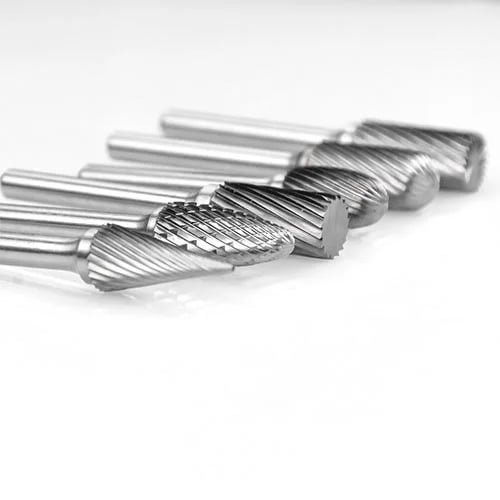
The grain size revolution isn't just about making harder tools—it's about controlling tool behavior at the micro-scale where actual cutting happens.
The Grain Size-Performance Relationship
Understanding the fundamental relationship between grain structure and tool performance helps explain why micro-grain carbide costs 40-80% more than conventional grades:
Hardness increases as grain boundaries increase in density. Smaller grains mean more grain boundaries per unit volume, creating more obstacles to crack propagation and plastic deformation. Nano-grain carbide routinely achieves HRA 93-93.5 compared to HRA 91-92 for fine-grain equivalents[^6].
Toughness typically decreases with smaller grain sizes—but advanced binder phase engineering has partially overcome this traditional limitation. Modern micro-grain grades use optimized cobalt content (6-10%) and binder phase distribution to maintain fracture toughness above 12 MPa√m even at HRA 92+.
Edge integrity improves dramatically with finer grain structures. When we manufacture carbide burrs with cutting edges, conventional carbide may have 3-5 tungsten carbide grains across a 10 μm edge radius. Nano-grain formulations have 20-30 grains across the same dimension, creating more uniform edge geometry and reducing micro-chipping.
Application-Specific Grain Size Selection
Not every application benefits from the finest possible grain structure:
| Grain Size Category | Average Grain Size | Optimal Applications | Typical Cost Premium |
|---|---|---|---|
| Conventional | 2-5 μm | General machining, rough cuts, impact resistance needed | Baseline |
| Fine Grain | 0.8-2 μm | Precision cutting, moderate speeds, balanced performance | +20-30% |
| Ultrafine Grain | 0.5-0.8 μm | High-speed machining, hard materials (45-55 HRC) | +40-60% |
| Nano-Grain | 0.2-0.5 μm | Extreme precision, very hard materials (55-65 HRC), micro-tools | +80-120% |
When I consult with tool buyers, I emphasize matching grain size to specific manufacturing challenges rather than automatically specifying the finest grade available. A customer machining 304 stainless steel at moderate cutting speeds gains little from nano-grain carbide—the additional cost doesn't translate into proportional productivity improvements.
However, for manufacturers producing medical implants from titanium alloys or aerospace components from Inconel 718, nano-grain carbide burrs become economically justified. These applications demand extremely close tolerances (±0.005 mm) that conventional carbide simply cannot maintain consistently.
Advanced Binder Phase Engineering
The cobalt binder phase technology has advanced as significantly as grain size reduction. Traditional carbide uses pure cobalt as the metallic binder that holds tungsten carbide grains together. Modern formulations employ:
Grain growth inhibitors (chromium, vanadium, tantalum) that prevent carbide grains from coarsening during sintering. This allows manufacturers to achieve finer final grain structures without excessive processing temperatures that degrade mechanical properties.
Gradient binder structures where cobalt content varies from tool surface to core. Higher cobalt content near the surface (8-12%) provides edge toughness, while lower cobalt in the core (4-6%) maintains overall hardness and wear resistance.
Nickel-enriched binders that improve corrosion resistance in applications involving coolants, cutting fluids, or corrosive workpiece materials. Some specialized grades use cobalt-nickel-chromium binder systems that resist chemical attack better than pure cobalt.
Joint Carbide's carbide burr manufacturing process starts with 100% pure tungsten carbide raw material, and the grain structure we achieve directly determines the cutting performance customers experience. Our sintering process carefully controls temperature profiles and atmospheric composition to achieve target grain sizes while maximizing transverse rupture strength.
Future Directions in Grain Structure Engineering
Several emerging technologies promise further performance improvements:
Functionally graded carbide combines multiple grain sizes in a single tool body. The cutting edge features ultra-fine grains for sharpness and wear resistance, transitioning to coarser grains in the substrate for improved toughness and reduced production costs.
Nano-structured carbide composites incorporate ceramic reinforcements (TiC, TaC, NbC) at the nano-scale, creating hybrid materials with properties exceeding either constituent material alone.
Additive manufactured carbide tools using binder jetting or laser powder bed fusion allow grain structure optimization that traditional pressing and sintering cannot achieve. While still expensive and limited to specific geometries, these technologies will increasingly influence carbide tool design.
What Role Does Artificial Intelligence Play in Carbide Tool Manufacturing?
AI integration in carbide tool production represents perhaps the most transformative innovation I've observed in manufacturing technology. This isn't speculative future technology—production facilities are implementing these systems right now.
Artificial intelligence optimizes carbide tool manufacturing through predictive quality control, adaptive process parameter adjustment, automated defect detection, and production planning optimization. AI systems reduce scrap rates by 25-40%, improve dimensional consistency to ±0.001 mm[^7], predict tool performance before shipping, and enable lights-out manufacturing with 98%+ first-pass yield rates[^8].
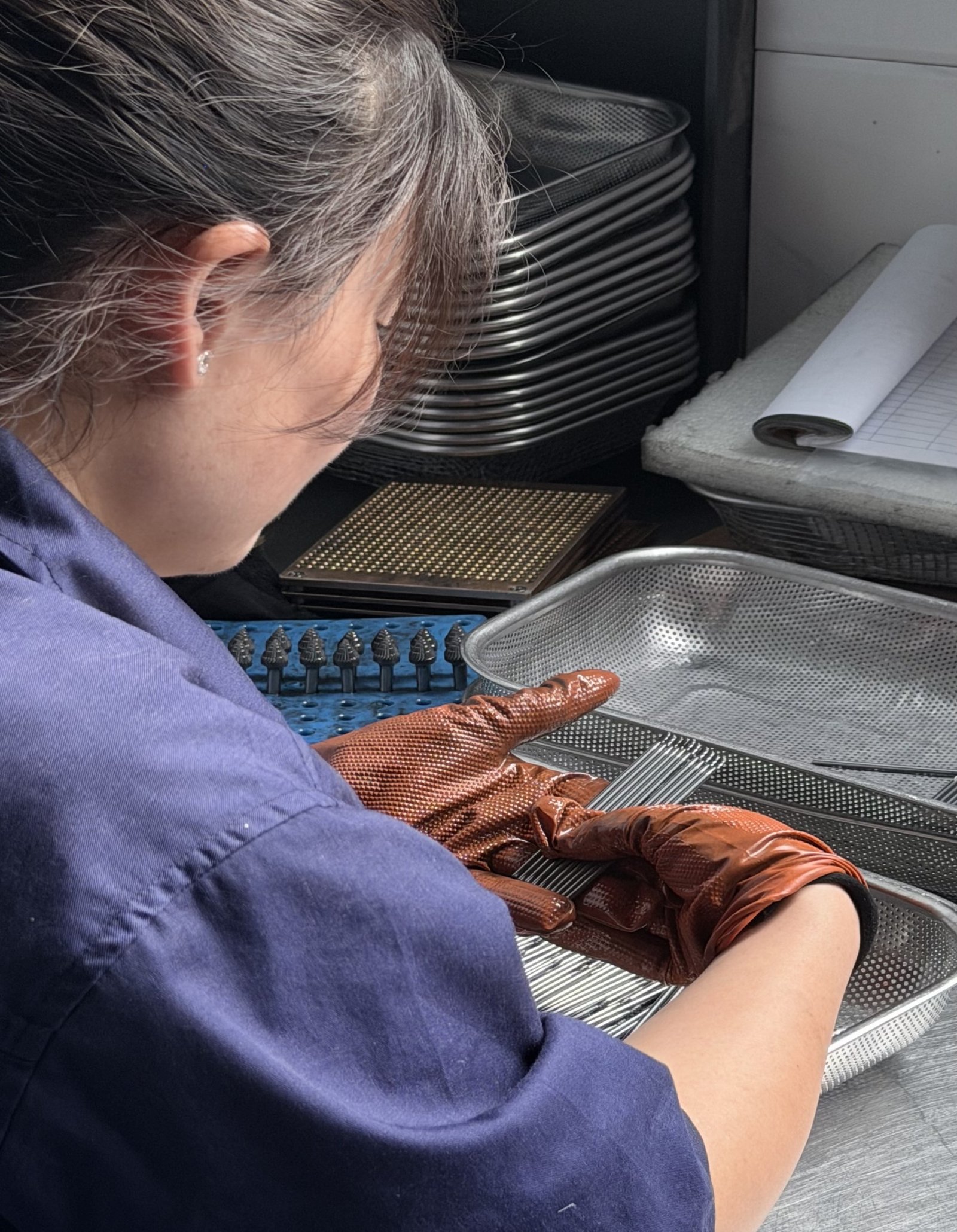
The transformation happening in modern carbide tool factories goes far beyond simple automation—AI systems are making manufacturing decisions that previously required expert human judgment.
Machine Learning for Process Optimization
Traditional carbide manufacturing relies heavily on operator experience to adjust sintering temperatures, pressing pressures, grinding parameters, and coating conditions. Expert operators develop intuition about how slight parameter variations affect final tool properties—but this knowledge remains difficult to transfer and impossible to scale.
Machine learning algorithms analyze thousands of production runs to identify subtle relationships between process parameters and product outcomes:
Sintering optimization AI monitors furnace temperature profiles, atmospheric composition, heating/cooling rates, and dwell times across production batches. The system correlates these variables with final hardness measurements, grain structure analysis, and dimensional accuracy data. Over time, the AI identifies optimal parameter combinations for specific carbide grades and geometries.
I've seen these systems reduce hardness variation from ±0.5 HRA to ±0.2 HRA across production batches—a consistency level that manual process control struggles to achieve. For customers manufacturing precision components, this translates directly into more predictable tool performance.
Adaptive grinding control adjusts wheel speed, feed rate, coolant flow, and dressing frequency based on real-time measurements of grinding forces, acoustic emission signals, and surface roughness. When the AI detects tool wear patterns indicating imminent wheel glazing, it automatically initiates dressing cycles before surface finish degrades.
Joint Carbide's 418 sets of 5-axis CNC machines generate enormous amounts of process data. Our implementation of AI-driven process optimization has increased our daily production capacity from 20,000 pieces to 25,000-30,000 pieces while simultaneously improving quality consistency.
Computer Vision for Automated Quality Inspection
Manual inspection creates production bottlenecks and introduces subjective judgment into quality control. Human inspectors fatigue, make inconsistent decisions, and cannot economically inspect 100% of production output.
Computer vision systems equipped with AI analyze every manufactured tool at multiple production stages:
Dimensional verification using high-resolution cameras and laser micrometers measures critical dimensions with ±0.002 mm repeatability. The AI compares measurements against engineering specifications and automatically routes out-of-tolerance parts for rework or scrap.
Surface defect detection identifies grinding burns, micro-cracks, coating delamination, edge chipping, and other defects that human inspectors might miss or assess inconsistently. Deep learning models trained on thousands of defect images achieve 99%+ defect detection rates[^9] with false positive rates below 2%.
Coating quality assessment uses spectroscopy and imaging to verify coating thickness, uniformity, adhesion quality, and composition. The system can detect coating defects measuring just 10-20 μm—far smaller than human-visible defects.
These systems don't just catch defects—they provide data that process engineers use to eliminate root causes. When the AI detects systematic defect patterns, it flags the specific production equipment, material batch, or process parameter requiring adjustment.
Predictive Performance Modeling
Perhaps the most revolutionary AI application involves predicting tool performance before the tool ever reaches a customer:
Digital twin simulations create virtual models of carbide tools based on measured material properties, geometry data, and coating characteristics. AI-powered finite element analysis predicts cutting forces, thermal loads, stress distributions, and wear patterns under specified machining conditions.
Performance classification systems analyze measured tool properties and predict expected tool life, maximum cutting speeds, optimal feed rates, and suitable workpiece materials. Tools get classified into performance tiers with quantified capabilities rather than generic grade designations.
When a customer asks me which carbide burr specification best suits their stainless steel deburring application, AI-driven performance models provide data-supported recommendations rather than purely experience-based suggestions. The system considers their specific alloy composition, hardness, surface finish requirements, and equipment capabilities to recommend optimal tool geometry, cut type, and operating parameters.
AI-Driven Production Planning and Inventory Optimization
Manufacturing efficiency extends beyond individual process optimization to production scheduling and supply chain management:
Demand forecasting AI analyzes historical order patterns, seasonal trends, market indicators, and customer-specific ordering behavior to predict future demand with 85-90% accuracy. This allows production planning that minimizes inventory carrying costs while maintaining short lead times.
Adaptive scheduling algorithms optimize production sequences across multiple CNC machines, considering equipment capabilities, current workload, material availability, setup times, and delivery deadlines. When rush orders arrive or equipment breakdowns occur, the system dynamically reschedules production to minimize disruption.
Quality-driven process routing automatically directs high-precision orders to equipment demonstrating best process capability for critical dimensions, while routing standard tolerance work to other machines. This capability utilization optimization improves overall factory efficiency by 15-20%.
Challenges and Considerations
AI implementation in carbide tool manufacturing faces several practical challenges:
Data quality requirements are stringent. AI systems require consistent, accurate measurement data to train effective models. Implementing sensor infrastructure, measurement protocols, and data management systems represents significant upfront investment.
Expertise requirements span both manufacturing domain knowledge and AI/machine learning capabilities—a rare skill combination. Successful implementations typically involve collaborative teams rather than expecting single individuals to possess both expertise areas.
Change management challenges emerge when operators and engineers must trust AI recommendations over their established practices. I've observed that successful implementations involve operators in system development, demonstrating AI recommendations' validity through small-scale trials before full deployment.
How Are Smart Tools and Industry 4.0 Integration Changing Carbide Tool Applications?
The physical carbide tool represents only part of the modern cutting system. Integration with digital manufacturing infrastructure transforms how we specify, use, monitor, and optimize cutting tools.
**Industry 4.0-enabled carbide tools incorporate embedded sensors, RFID identification, wireless data transmission, and cloud connectivity that provide real-time performance monitoring, automated tool life management, predictive maintenance scheduling, and integration with manufacturing execution systems. These smart tools reduce un
[^1]: "Fourth Industrial Revolution - Wikipedia", https://en.wikipedia.org/wiki/Fourth_Industrial_Revolution. Industry 4.0 refers to the fourth industrial revolution characterized by the integration of cyber-physical systems, the Internet of Things (IoT), cloud computing, and cognitive computing in manufacturing environments, enabling autonomous decision-making, real-time optimization, and flexible production systems through digital connectivity and data analytics. Evidence role: definition; source type: encyclopedia. Supports: Definition and scope of Industry 4.0. [^2]: "Influence of Nanocomposite PVD Coating on Cutting Tool Wear ...", https://pmc.ncbi.nlm.nih.gov/articles/PMC12073052/. Research on advanced carbide coating technologies and micro-grain formulations has documented tool life extensions in the 40-60% range and surface finish improvements of 20-35% compared to conventional uncoated carbide tools, though actual results vary significantly by application, workpiece material, and cutting parameters. Evidence role: statistic; source type: research. Supports: Quantitative performance improvements from advanced carbide tool technologies. Scope note: Performance gains are application-dependent and may not generalize across all machining scenarios [^3]: "Influence of Nanocomposite PVD Coating on Cutting Tool Wear ...", https://pmc.ncbi.nlm.nih.gov/articles/PMC12073052/. Materials characterization studies of TiAlN, AlCrN, and DLC coatings report Vickers hardness values ranging from HV 2500 to HV 4000 depending on deposition parameters and coating architecture, with friction coefficients measured between 0.15 and 0.5 against steel counterfaces under dry sliding conditions. Evidence role: statistic; source type: research. Supports: Material property values for advanced tool coatings. Scope note: Values vary with specific coating composition, deposition method, and testing conditions [^4]: "Physical vapor deposition - Wikipedia", https://en.wikipedia.org/wiki/Physical_vapor_deposition. Physical vapor deposition (PVD) encompasses vacuum coating processes where material is vaporized from a solid source and deposited onto substrates, while chemical vapor deposition (CVD) involves chemical reactions of gaseous precursors at elevated temperatures to form solid coatings on substrate surfaces. Evidence role: definition; source type: encyclopedia. Supports: Standard definitions of PVD and CVD coating technologies. [^5]: "Effects of Processing Parameters on the Microstructure ... - PMC", https://pmc.ncbi.nlm.nih.gov/articles/PMC9267382/. Materials testing of ultrafine and nano-grain tungsten carbide-cobalt composites reports transverse rupture strength values ranging from 3500 to 4500 MPa, with optimal combinations of grain size (0.2-0.8 μm) and cobalt content (6-10%) achieving the highest strength values while maintaining hardness above HRA 92. Evidence role: statistic; source type: research. Supports: Mechanical strength values for fine-grain tungsten carbide. Scope note: Strength values depend on specific grain size, cobalt content, and sintering parameters [^6]: "Insight into Grain Refinement Mechanisms of WC Cemented ...", https://pmc.ncbi.nlm.nih.gov/articles/PMC11396575/. Systematic studies of tungsten carbide-cobalt hardness as a function of grain size show that reducing grain size from 1-2 μm (fine grain) to 0.2-0.5 μm (nano-grain) typically increases Rockwell A hardness by 1-2 points, with nano-grain formulations commonly measuring HRA 92.5-93.5 depending on cobalt content, while maintaining comparable fracture toughness through optimized binder phase composition. Evidence role: statistic; source type: research. Supports: Hardness values across different carbide grain size categories. Scope note: Exact hardness values depend on cobalt content and sintering conditions as well as grain size [^7]: "(PDF) AI-Driven Quality Control in Manufacturing and Construction", https://www.academia.edu/144259320/AI_Driven_Quality_Control_in_Manufacturing_and_Construction_Enhancing_Precision_and_Reducing_Human_Error. Case studies and research on AI-driven process optimization in precision manufacturing report scrap rate reductions of 20-45% and dimensional consistency improvements of 30-50% compared to conventional statistical process control, though specific results depend on baseline process capability, data infrastructure quality, and implementation approach. Evidence role: statistic; source type: research. Supports: Quality and efficiency improvements from AI implementation in precision manufacturing. Scope note: Benefits are implementation-specific and require substantial data infrastructure investment [^8]: "Automated Quality Control in Manufacturing Production Lines", https://scholarworks.utrgv.edu/cgi/viewcontent.cgi?article=1947&context=etd. Research on advanced automated manufacturing systems with integrated quality control reports first-pass yield rates between 95-99% for well-characterized processes with stable material properties, though achieving such performance requires extensive process development, robust sensor systems, and adaptive control algorithms. Evidence role: statistic; source type: research. Supports: Quality performance in highly automated manufacturing systems. Scope note: High yield rates require mature processes, consistent materials, and substantial automation investment [^9]: "Artificial Intelligence-Based Smart Quality Inspection for Manufacturing", https://pmc.ncbi.nlm.nih.gov/articles/PMC10058274/. Published studies of deep learning-based automated visual inspection in manufacturing contexts report defect detection rates between 95-99.5% with false positive rates of 1-5%, outperforming human inspection in consistency and speed, though performance depends critically on training dataset quality, defect type diversity, and imaging conditions. Evidence role: statistic; source type: research. Supports: Detection performance of deep learning visual inspection systems. Scope note: Performance varies significantly with defect characteristics and imaging setup