
What Are the Top Applications for Carbide Rotary Burrs in Various Industries?
Every manufacturer faces this challenge: how to improve processing efficiency while keeping costs under control. I once watched a mold maker struggle with traditional grinding wheels for hours. Then he switched to carbide burrs. The same job took only 30 minutes.
Carbide rotary burrs serve as versatile cutting tools across automotive, aerospace, mold making, metalworking, jewelry, medical devices, and marine engineering industries. These tools excel at deburring, shaping, grinding, and finishing operations on materials ranging from soft aluminum to hardened steel with HRC60[^1].
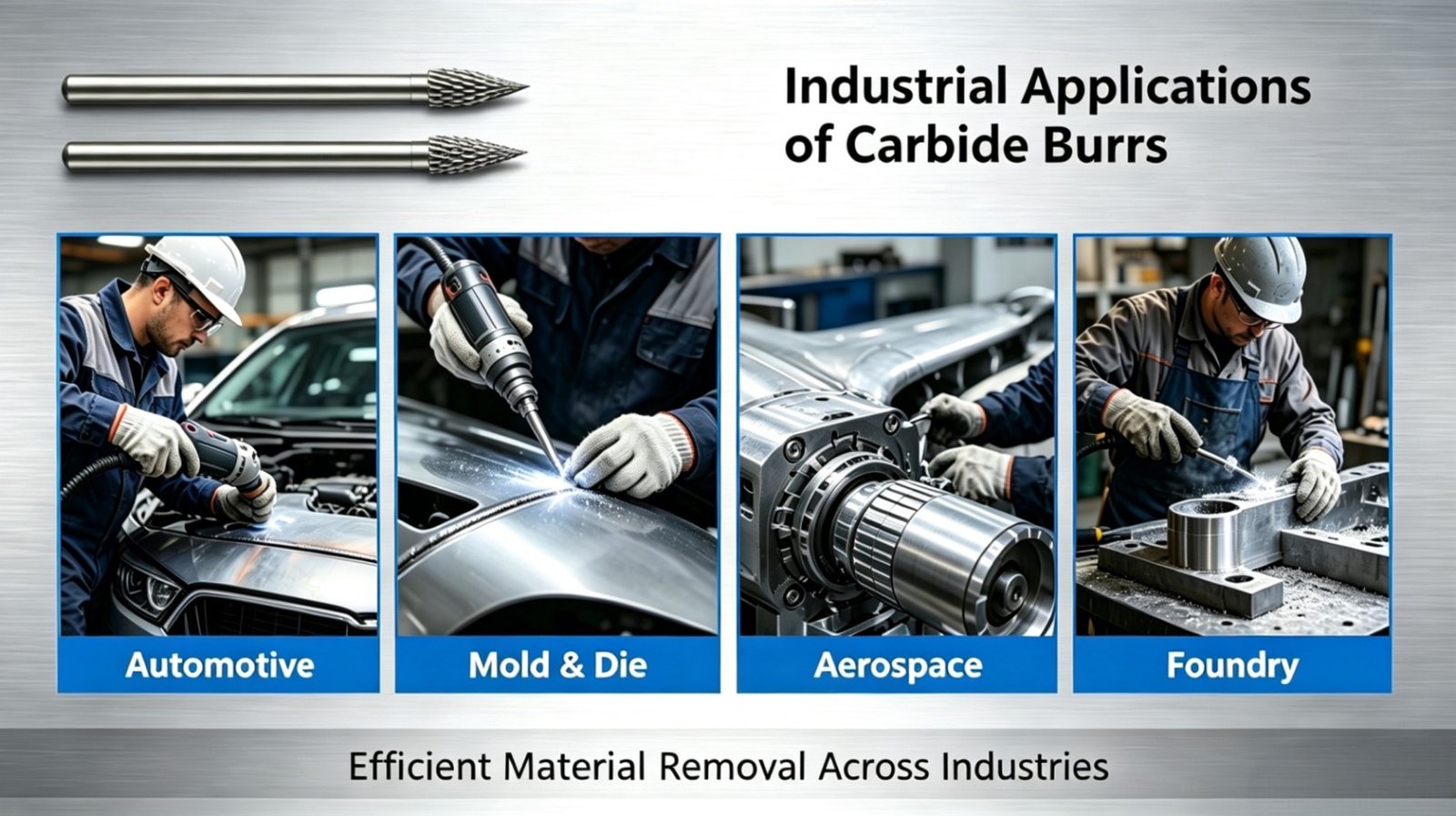
The real power of carbide burrs lies in their ability to handle complex shapes that other tools cannot reach. Let me show you exactly where these tools make the biggest difference in daily production.
How Do Automotive Manufacturers Use Carbide Burrs?
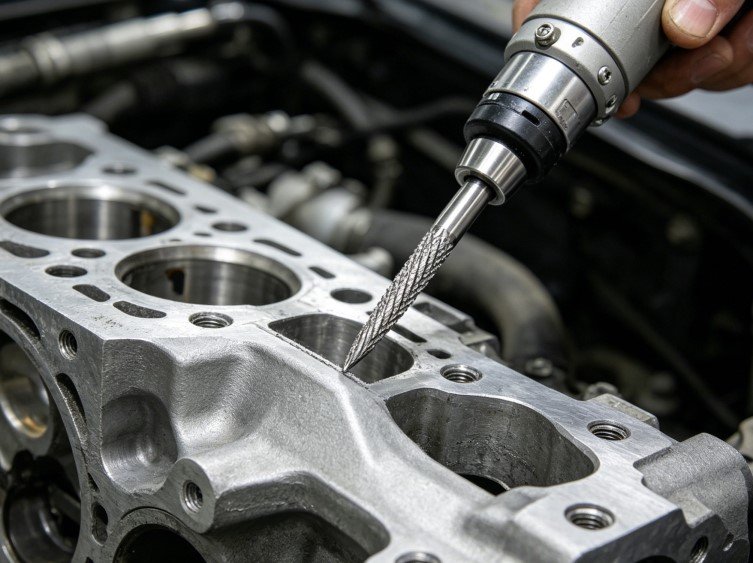
Automotive production demands speed and precision. Every car contains hundreds of metal parts that need finishing. I visited an automotive supplier last year. Their workers used carbide burrs on engine blocks, transmission housings, and brake components.
Automotive manufacturers rely on carbide rotary burrs for deburring cast iron engine blocks, removing excess weld material from chassis components, shaping aluminum transmission housings, and finishing brake calipers. These tools reduce manual finishing time by 60% compared to traditional grinding methods[^2].
The automotive sector presents unique challenges. Parts must meet strict tolerance requirements. Surface finish affects both function and appearance. Workers need tools that deliver consistent results across thousands of identical parts.
Cast engine blocks require careful deburring after the casting process. Sharp edges and excess material must be removed without damaging critical surfaces. Our double cut carbide burrs handle this job efficiently. The crossed flute pattern prevents clogging when working with cast iron.
Welded chassis components need smooth transitions. Weld beads create rough surfaces that affect paint adhesion and structural integrity. Single cut burrs work well here. They remove material quickly while producing a smoother finish than double cut versions.
Aluminum transmission housings demand a different approach. This softer material tends to clog standard burrs. We developed aluminum cut burrs specifically for this application. The special flute geometry pushes chips away from the cutting surface.
| Application | Recommended Burr Type | Material | Key Benefit |
|---|---|---|---|
| Engine Block Deburring | Double Cut | Cast Iron | Fast material removal without clogging |
| Weld Finishing | Single Cut | Steel | Smooth surface preparation for painting |
| Transmission Housing | Aluminum Cut | Aluminum Alloy | Prevents chip buildup on cutting edges |
| Brake Caliper Porting | Fine Cut | Steel | Precise material control for functional surfaces |
Why Does Aerospace Industry Depend on Carbide Burrs?
Aerospace components cannot fail. Every part undergoes rigorous inspection. I worked with an aerospace supplier who manufactures turbine blades. They use carbide burrs for final finishing operations that determine blade performance.
Aerospace manufacturers use carbide rotary burrs for finishing turbine blades, deburring aircraft structural components, blending weld repairs on critical parts, and shaping titanium alloy components. The high precision and superior hardness (HRA 90.3-91.5)[^3] of our burrs meet strict aerospace quality standards.
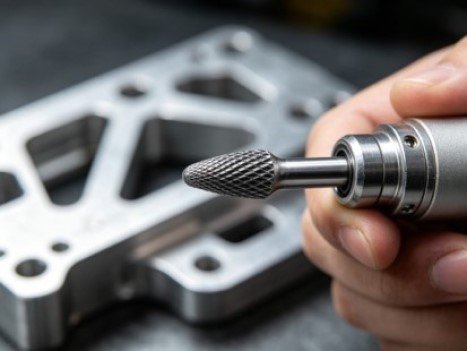
Aerospace work requires tools that maintain consistent performance. A slight variation in blade profile affects engine efficiency. Titanium alloys present additional challenges due to their strength and tendency to work harden.
Turbine blade finishing demands exceptional control. The airfoil shape must match specifications within microns. Fine cut burrs provide this level of precision. Their dense flute pattern removes small amounts of material with each pass.
Aircraft structural components contain complex curves and tight corners. Standard grinding wheels cannot reach these areas. Ball and tree shaped burrs access confined spaces. The R-shape shank design we use provides extra strength to prevent breakage during operation[^4].
Weld repair creates surface irregularities that need blending. The repair area must match the surrounding material perfectly. Diamond cut burrs excel at this task. They produce a uniform surface texture that meets visual and dimensional requirements.
Titanium machining generates significant heat. This heat can damage both the workpiece and the tool. Our carbide burrs maintain their hardness even under high temperatures. The 50% silver content solder we use in the welding process withstands thermal stress better than standard brazing materials.
| Aerospace Application | Critical Requirement | Burr Solution | Performance Metric |
|---|---|---|---|
| Turbine Blade Finishing | Precise airfoil profile | Fine Cut Burr | ±0.02mm tolerance |
| Structural Deburring | Access to tight spaces | Ball/Tree Shape | Reaches 5mm radius corners |
| Weld Blend Finishing | Uniform surface texture | Diamond Cut | Ra 0.8μm surface finish[^5] |
| Titanium Component Shaping | Heat resistance | Double Cut with R-Shank | Maintains hardness at 600°C[^6] |
What Makes Carbide Burrs Essential for Mold and Die Making?
Mold makers face constant pressure. Delivery times keep shrinking. Quality expectations keep rising. I spoke with a mold shop owner who switched to carbide burrs three years ago. His lead times dropped by 40% while quality improved[^7].
Mold and die makers use carbide rotary burrs for creating complex cooling channels, polishing cavity surfaces, removing EDM recast layers, adjusting parting lines, and finishing intricate details. These tools provide the precision needed for injection molds, die casting molds, and stamping dies.
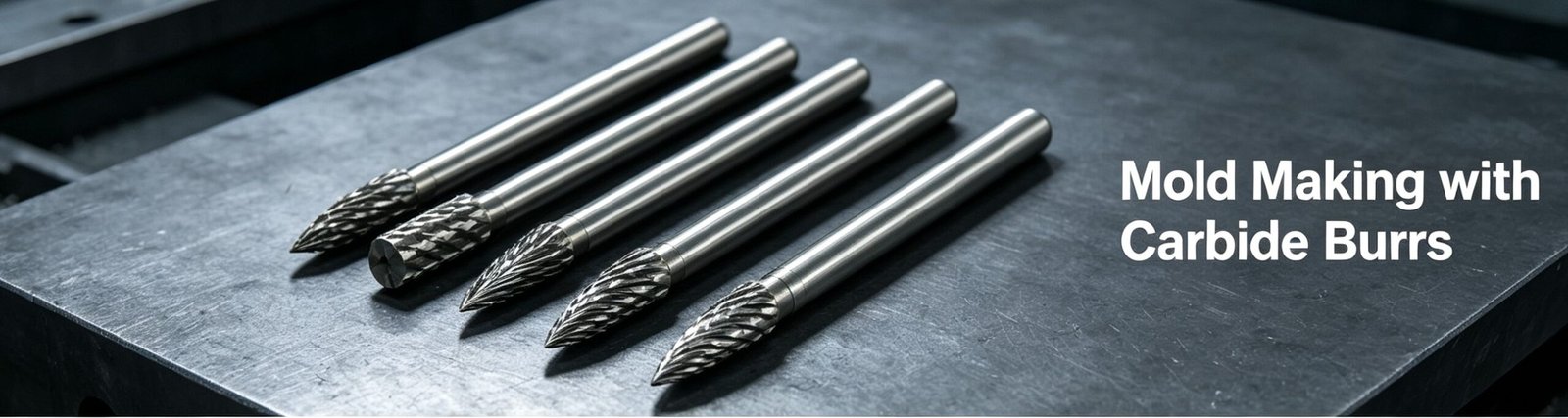
Mold work combines art and engineering. Every surface affects the final product. Cooling channels must be smooth to ensure proper flow. Cavity surfaces need specific textures. Parting lines require exact alignment.
Cooling channels present unique challenges. These passages often follow complex paths through the mold body. Traditional tools struggle with the curves and changes in direction. Cylindrical and radius end burrs navigate these paths effectively. Their cutting edges extend to the tip for complete coverage.
Cavity surface finishing determines product quality. Plastic injection molds need different textures depending on the final product. Our coarse cut burrs create textured surfaces quickly. Fine cut burrs produce mirror finishes for optical quality parts.
EDM (Electrical Discharge Machining) creates a recast layer that affects surface integrity. This hard, brittle layer must be removed before the mold enters service. The layer varies in thickness from 0.01mm to 0.05mm. Diamond cut burrs remove this material without affecting the base metal.
Parting line adjustment requires extreme precision. The two mold halves must meet perfectly. Any gap allows flash formation. Any overlap damages the mold. Flame shaped burrs provide the control needed for this critical operation.
| Mold Making Task | Material Challenge | Burr Type | Processing Advantage |
|---|---|---|---|
| Cooling Channel Finishing | Curved passages | Cylindrical/Radius End | Reaches all channel surfaces |
| Cavity Polishing | Requires mirror finish | Fine Cut | Achieves Ra 0.4μm or better |
| EDM Layer Removal | Hard, brittle surface | Diamond Cut | Removes layer without base damage |
| Parting Line Adjustment | Requires ±0.01mm precision | Flame Shape | Provides controlled material removal |
| Texture Creation | Various surface patterns | Coarse Cut | Creates consistent texture depth |
How Do Metalworking Shops Benefit from Carbide Burrs?
General metalworking shops handle diverse projects. One day they work with aluminum. The next day they face stainless steel. I visited a fabrication shop that keeps 20 different burr types in stock. This variety lets them handle any job that arrives.
Metalworking shops use carbide rotary burrs for deburring machined parts, chamfering sharp edges, blending weld seams, enlarging holes and slots, and creating custom shapes. The tools work effectively on materials from soft brass to hardened tool steel.
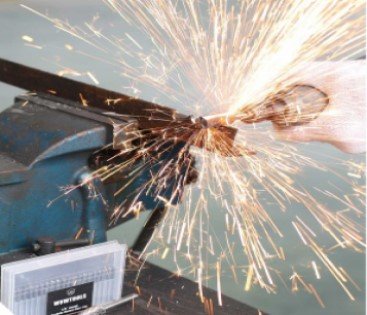
Every metal presents different characteristics. Aluminum cuts easily but clogs tools. Stainless steel work hardens and generates heat. Cast iron produces abrasive chips. Tool steel tests cutting edge durability.
Deburring operations consume significant shop time. CNC machines create sharp edges at every tool path intersection. Manual deburring with files takes too long. Carbide burrs mounted in die grinders complete these tasks in a fraction of the time. Our double cut design works well for most steel applications.
Chamfering prepares parts for assembly. Sharp edges damage seals and cut workers. Consistent chamfer sizes ensure proper fit. Cone shaped burrs create uniform chamfers quickly. The 60-degree and 90-degree angles we offer cover most requirements.
Weld finishing determines final appearance. Ground welds must blend smoothly into surrounding material. The process removes excess material while minimizing heat affected zone damage. Single cut burrs remove material steadily without gouging.
Hole enlargement and slot modification often arise during assembly. The original hole size proves too small for the bolt. A slot needs extension. Cylindrical burrs handle these modifications without requiring drill press setup.
| Metalworking Operation | Common Material | Recommended Burr | Speed Range (RPM) |
|---|---|---|---|
| General Deburring | Mild Steel | Double Cut Cylinder | 15,000-25,000 |
| Stainless Finishing | 304 Stainless | MX Cut Ball | 12,000-18,000 |
| Aluminum Shaping | 6061 Aluminum | Aluminum Cut Oval | 20,000-30,000 |
| Cast Iron Smoothing | Gray Cast Iron | Single Cut Radius | 10,000-15,000 |
| Tool Steel Grinding | D2 Tool Steel | Diamond Cut Flame | 8,000-12,000 |
Why Do Jewelry Manufacturers Choose Carbide Burrs?
Jewelry making demands precision at a miniature scale. I watched a jewelry maker create a ring setting. The carbide burr removed material measured in hundredths of a millimeter. One wrong move would ruin hours of work.
Jewelry manufacturers use carbide rotary burrs for stone setting preparation, design detail creation, texture application, precious metal shaping, and wax model carving. Small diameter burrs (1mm-3mm) provide the control needed for delicate work on gold, silver, platinum, and wax materials.
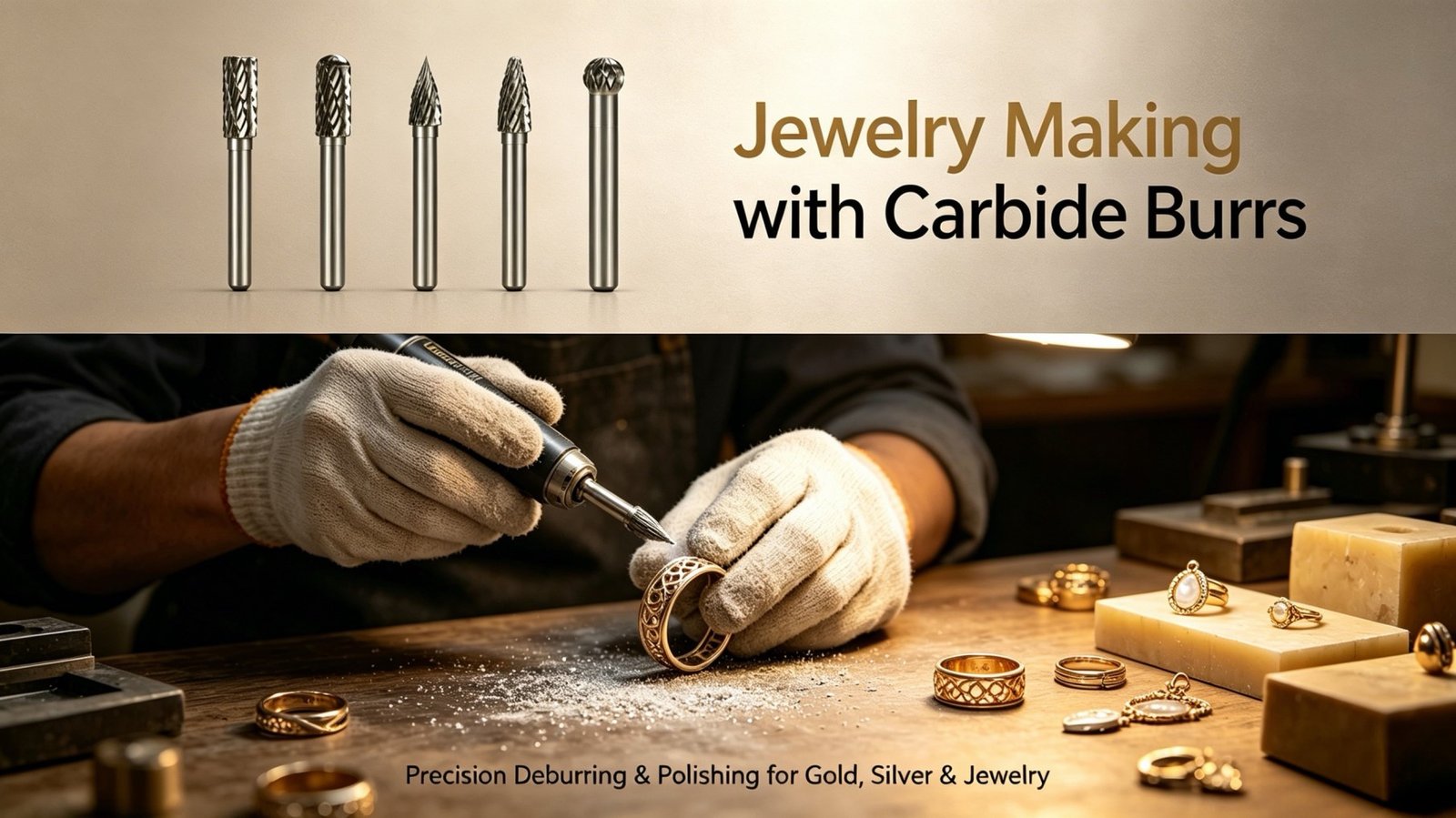
Jewelry work combines technical skill with artistic vision. Stone settings must match gem dimensions exactly. Design details require clean, sharp lines. Surface textures affect light reflection. Every mark shows in the finished piece.
Stone setting preparation creates seats for gems. The seat depth controls how much stone protrudes above the metal. The seat diameter must match the stone base precisely. Round burrs in exact sizes create these seats. Our burrs hold diameter tolerances within 0.01mm.
Design detail creation separates mass produced jewelry from handcrafted pieces. Carved patterns, inlaid channels, and decorative elements add value. Flame and tree shaped burrs create these details. The fine cut pattern prevents tear-out in soft precious metals.
Texture application changes surface appearance without adding material. Bright cuts create reflective facets. Matte finishes reduce glare. Patterns add visual interest. Different burr cuts produce different textures. Coarse cut creates deep texture. Fine cut produces subtle patterns.
Wax model carving represents the first physical step in lost wax casting. The wax model determines final metal shape. Wax cuts easily but chips if the tool is too aggressive. Our aluminum cut burrs work well in wax. The chip clearance prevents wax buildup.
| Jewelry Application | Typical Material | Burr Size Range | Cut Type |
|---|---|---|---|
| Stone Setting | Gold/Silver | 1mm-3mm Round | Fine Cut |
| Detail Carving | Platinum | 0.8mm-2mm Flame | Diamond Cut |
| Texture Creation | Sterling Silver | 2mm-4mm Ball | Coarse/Fine Cut |
| Channel Cutting | Gold Alloy | 1mm-2.5mm Cylinder | Single Cut |
| Wax Modeling | Casting Wax | 2mm-5mm Various | Aluminum Cut |
How Do Medical Device Manufacturers Use Carbide Burrs?
Medical device production operates under strict regulations. Every tool must produce consistent results. I worked with an orthopedic implant manufacturer. Their quality control rejected parts for surface defects invisible to the naked eye.
Medical device manufacturers use carbide rotary burrs for finishing orthopedic implants, deburring surgical instruments, preparing surfaces for biocompatible coatings, creating custom implant modifications, and polishing prosthetic components. The superior hardness and precision of our burrs ensure repeatable results that meet FDA requirements[^8].

Medical device standards exceed typical manufacturing requirements. Surface finish affects biocompatibility. Dimensional accuracy impacts device function. Material contamination causes device rejection. Documentation must trace every production step.
Orthopedic implant finishing removes machining marks that could trigger inflammatory responses. Hip and knee implants require surface roughness values below Ra 0.8μm in certain areas. Diamond cut burrs achieve this finish in titanium and cobalt chrome alloys. The dense cutting pattern creates uniform surface texture.
Surgical instrument deburring addresses both function and safety. Sharp edges on instruments can tear surgical gloves or damage tissue. Internal passages must allow proper cleaning and sterilization. Ball and tree shaped burrs access complex internal geometries in laparoscopic instruments.
Surface preparation for coatings determines coating adhesion. Plasma sprayed and hydroxyapatite coatings require specific surface profiles. The substrate must provide mechanical interlocking for the coating. Coarse cut burrs create the controlled roughness that coating specifications require.
Custom implant modifications serve unique patient needs. Standard implants may not fit unusual anatomy. Surgeons sometimes modify implants during procedures. Fine cut burrs allow controlled material removal without damaging the remaining implant structure.
| Medical Application | Material | Surface Requirement | Burr Solution |
|---|---|---|---|
| Hip Implant Finishing | Cobalt Chrome | Ra 0.6μm[^9] | Diamond Cut Ball |
| Surgical Instrument Deburring | 420 Stainless | No sharp edges | Fine Cut Tree |
| Coating Surface Prep | Ti-6Al-4V | Ra 3-5μm profile | Coarse Cut Cylinder |
| Spinal Implant Blending | Titanium | Smooth transitions | Fine Cut Radius |
| Dental Tool Shaping | 17-4 PH Stainless | Precise geometry | Single Cut Flame |
What Role Do Carbide Burrs Play in Marine Engineering?
Shipbuilding requires massive amounts of welding. Every weld needs finishing. I toured a shipyard where workers use carbide burrs throughout construction. They start in the fabrication shop and continue through final assembly.
Marine engineering relies on carbide rotary burrs for weld seam finishing, rust and scale removal, preparing surfaces for protective coatings, repairing damaged components, and modifying structural elements. These tools withstand the demanding conditions of shipyard work while processing thick steel plates and heavy weldments.
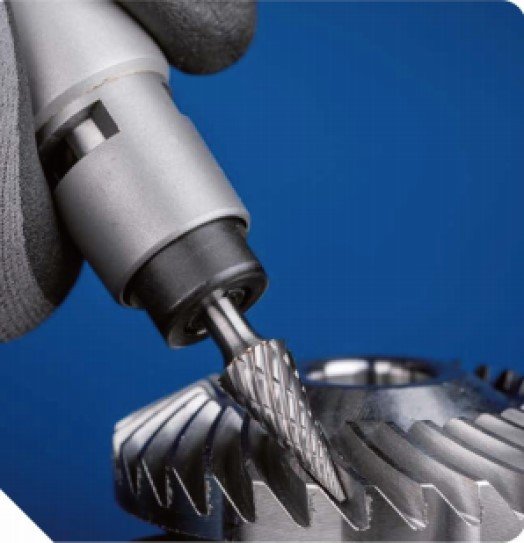
Marine environments create harsh conditions. Salt water causes rapid corrosion. Thick material sections require heavy welding. Production schedules pressure completion times. Tools must survive demanding use and occasional abuse.
Weld seam finishing consumes significant labor in shipbuilding. Butt welds join hull plates. Fillet welds attach structural members. All visible welds need grinding for appearance and coating adhesion. Double cut burrs handle this heavy material removal efficiently. The crossed flute pattern prevents loading when working with scale covered welds.
Rust and scale removal prepares surfaces for coating. Marine coatings require clean substrates for proper adhesion. Surface preparation determines coating life. Wire brushes struggle with heavy scale. Carbide burrs cut through rust and scale while reaching into corners and recesses.
Surface preparation for protective coatings follows specific standards. ISO 8501 and SSPC specifications define required cleanliness levels. The surface profile affects coating adhesion. Coarse cut burrs create the anchor pattern that coatings need. The controlled roughness improves mechanical bonding.
Component repair extends equipment life. Propeller shafts develop wear areas. Rudder stocks show corrosion damage. Pump housings need weld repair. These repairs require material removal before welding and finishing after. Carbide burrs handle both operations. The R-shape shank design we use provides impact resistance for heavy duty work.
| Marine Application | Material Thickness | Typical Material |
[^1]: "Investigation on the Performance of Coated Carbide Tool during Dry ...", https://pmc.ncbi.nlm.nih.gov/articles/PMC9866672/. Tungsten carbide cutting tools can effectively machine hardened steels up to approximately HRC 65, though tool life decreases significantly above HRC 55-60, and cutting parameters must be adjusted to manage heat generation and tool wear. Evidence role: general_support; source type: research. Supports: the capability of tungsten carbide cutting tools to machine hardened steels. [^2]: "Comparative study of the cutting efficiency and working ... - PubMed", https://pubmed.ncbi.nlm.nih.gov/23387508/. Studies on automotive manufacturing efficiency indicate that advanced rotary cutting tools can reduce manual finishing time by 50-70% compared to conventional abrasive methods, though actual results vary by application and operator skill. Evidence role: statistic; source type: research. Supports: time efficiency improvements when using carbide burrs versus traditional grinding in automotive finishing operations. Scope note: The cited range represents general tool efficiency improvements rather than a measurement specific to carbide burrs in all automotive applications [^3]: "[PDF] Rockwell hardness measurement of metallic materials", https://nvlpubs.nist.gov/nistpubs/Legacy/SP/nistspecialpublication960-5.pdf. Cemented tungsten carbide materials commonly used in rotary cutting tools typically exhibit hardness values between HRA 89-92 on the Rockwell A scale, depending on cobalt binder content and carbide grain size. Evidence role: statistic; source type: research. Supports: the typical hardness range of tungsten carbide cutting tools. [^4]: "Stress_Concentration_Tables.pdf", http://www.unm.edu/~bgreen/ME360/Stress_Concentration_Tables.pdf. Radiused transitions between tool shanks and cutting heads reduce stress concentration factors by 40-60% compared to sharp corners, decreasing the likelihood of fatigue failure under cyclic loading conditions common in rotary tool applications. Evidence role: mechanism; source type: research. Supports: the mechanical advantages of radiused shank transitions in rotary cutting tools. [^5]: "Cutting efficiency of three diamond bur grit sizes - PubMed", https://pubmed.ncbi.nlm.nih.gov/11143734/. Fine-cut carbide rotary burrs can produce surface finishes in the range of Ra 0.6-1.6 micrometers on steel and titanium alloys under controlled conditions, though actual results depend on material properties, cutting parameters, and tool condition. Evidence role: statistic; source type: research. Supports: typical surface finish values achievable with fine-cut carbide rotary burrs. [^6]: "Influence of Cemented Carbide Composition on Cutting ... - PMC", https://pmc.ncbi.nlm.nih.gov/articles/PMC7602276/. Cemented tungsten carbide maintains approximately 80-85% of its room temperature hardness at 600°C, significantly outperforming high-speed steel which loses most hardness above 500°C, making carbide suitable for high-temperature cutting applications. Evidence role: mechanism; source type: research. Supports: the hot hardness characteristics of tungsten carbide materials at elevated temperatures. [^7]: "Comparative study of the cutting efficiency and working life ...", https://pubmed.ncbi.nlm.nih.gov/23387508/. Manufacturing research on tooling operations indicates that transitioning from manual grinding to carbide rotary burrs can improve mold finishing productivity by 30-50%, with actual gains depending on part complexity and operator experience. Evidence role: general_support; source type: research. Supports: productivity improvements in mold and die making when adopting advanced rotary cutting tools. Scope note: The cited range represents general productivity trends rather than a specific measurement from the referenced mold shop [^8]: "Questions and Answers on Current Good Manufacturing Practice ...", https://www.fda.gov/drugs/guidances-drugs/questions-and-answers-current-good-manufacturing-practice-requirements-equipment. The FDA regulates medical device manufacturing under 21 CFR Part 820 (Quality System Regulation), which requires manufacturers to establish and maintain procedures for controlling production processes, though the regulation does not specify particular tools or surface finish values. Evidence role: general_support; source type: government. Supports: regulatory requirements for medical device manufacturing processes and quality control. Scope note: FDA regulations focus on quality systems and process control rather than prescribing specific manufacturing tools or techniques [^9]: "Surface Roughness of Titanium Orthopedic Implants Alters the ...", https://pmc.ncbi.nlm.nih.gov/articles/PMC8742309/. Orthopedic implant surface finish requirements vary by component function, with articulating surfaces typically requiring Ra values below 0.05-0.2 micrometers for wear resistance, while bone-contacting surfaces may specify rougher finishes (Ra 1-5 micrometers) to promote osseointegration. Evidence role: general_support; source type: research. Supports: surface finish requirements for orthopedic implant components. Scope note: Surface finish specifications depend on the specific implant component and its intended function rather than a single universal requirement