
What Makes Burr Sets Essential for Automotive and Aerospace Industries?
Do you struggle with precision metalworking in high-stakes manufacturing? Material removal, surface finishing, and intricate part shaping demand tools that never compromise. Burr sets solve these exact challenges every single day.
Burr sets are specialized rotary cutting tools used extensively in automotive and aerospace manufacturing for deburring, surface preparation, weld seam removal, and precision shaping of metal components. These carbide-tipped tools deliver consistent results on hardened materials while maintaining tight tolerances required by both industries.
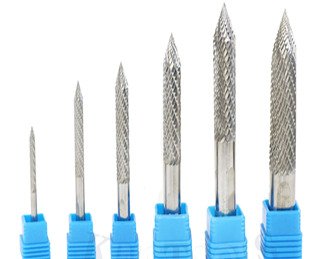
The manufacturing standards in automotive and aerospace sectors leave no room for error. I have worked with these industries for over 15 years, and I've seen how the right burr set transforms production efficiency while meeting strict quality requirements.
Why Do Automotive Manufacturers Rely on Carbide Burr Sets?
Automotive production demands speed without sacrificing quality. Every component must fit perfectly, function reliably, and meet safety standards. Traditional grinding methods often fall short when production volumes increase.
Carbide burr sets enable automotive manufacturers to remove excess material from cast parts, smooth weld joints, clean up threaded holes, and prepare surfaces for coating—all while maintaining production speed. The hardness of carbide (HRA 90.3-91.5) ensures consistent performance across thousands of parts.[^1]
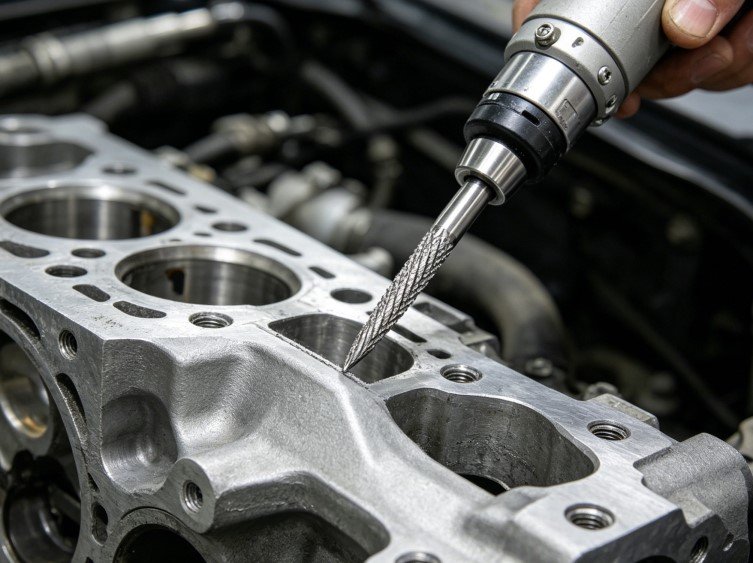
Common Automotive Applications for Burr Sets
I have partnered with a leading Korean automotive parts manufacturer for over 10 years. They place consistent monthly orders because our burr sets deliver reliable quality that keeps their production lines running smoothly. Here's what they use them for:
Engine Component Finishing Engine blocks, cylinder heads, and transmission housings require precise internal finishing. Burr sets reach into tight spaces that grinding wheels cannot access. The double-cut design removes material efficiently from stainless steel and heat-resistant alloys used in modern engines.[^2]
Brake System Manufacturing Brake calipers and rotor mounting surfaces need perfect flatness. Any burr or sharp edge creates safety risks. Our customers use aluminum-cut burr sets for softer brake components and double-cut sets for hardened steel parts.
Exhaust System Preparation Exhaust manifolds and catalytic converter housings require smooth internal surfaces for optimal gas flow. The chip-breaker cut design handles stainless steel exhaust components without clogging, even during extended production runs.
| Application Area | Recommended Cut Type | Common Shapes Used | Material Processed |
|---|---|---|---|
| Engine Blocks | Double Cut (MX) | Cylindrical, Ball | Cast Iron, Steel Alloys |
| Brake Components | Aluminum Cut | Flame, Cone | Aluminum Alloys |
| Exhaust Systems | Chip Breaker (MR) | Cylindrical, Tree | Stainless Steel |
| Transmission Parts | Single Cut (M) | Oval, Cylindrical | Cast Iron, Steel |
| Chassis Components | Coarse Cut (C) | Ball, Flame | Mild Steel |
The key advantage in automotive work is versatility. A single burr set can handle multiple tasks across different workstations. This reduces tool inventory costs and simplifies operator training.
How Do Aerospace Applications Differ from Automotive Use?
Aerospace manufacturing operates under completely different constraints. Weight matters as much as strength. Every gram counts.[^3] Surface finish affects aerodynamics. Material waste must be minimized because aerospace alloys cost significantly more.
Aerospace applications require burr sets with exceptional precision and longevity because they work with titanium, Inconel, and other high-temperature alloys. The fine-cut and diamond-cut designs provide the surface finish quality that aerospace specifications demand while extending tool life in these difficult materials.
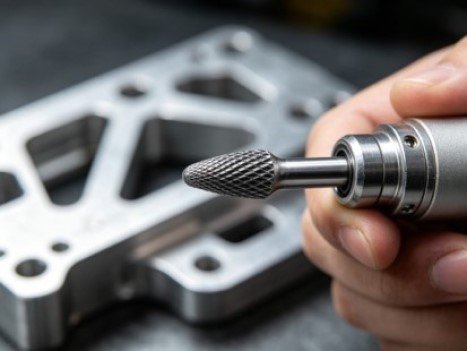
Critical Aerospace Manufacturing Tasks
Turbine Component Finishing Turbine blades and vanes have complex geometries with tight tolerances. I have seen aerospace manufacturers spend hours perfecting a single component. The wrong burr damages expensive parts. Our fine-cut burrs deliver smooth finishes on Inconel and titanium without material stress.
Airframe Structural Work Aircraft frames use aluminum alloys that require careful handling. Too aggressive a cut creates work-hardening. Our aluminum-cut burrs remove material efficiently while preventing surface damage. The result is consistent quality across thousands of rivet holes and joint preparations.
Landing Gear Manufacturing Landing gear components endure extreme stress. Surface finish directly affects fatigue resistance.[^4] Aerospace manufacturers use our diamond-cut burrs for final finishing operations because they create microscopic surface patterns that improve coating adhesion.
Fuel System Components Fuel lines and fittings must be perfectly smooth inside. Any roughness creates turbulence or contamination points. The coarse-cut design removes material quickly during rough shaping, then fine-cut burrs create the required surface finish.
| Aerospace Component | Material Challenge | Burr Solution | Critical Requirement |
|---|---|---|---|
| Turbine Blades | High-temp alloys | Fine Cut (F) | Surface finish Ra < 0.8 |
| Airframe Parts | Lightweight aluminum | Aluminum Cut | No work-hardening |
| Landing Gear | High-strength steel | Diamond Cut (D) | Fatigue resistance |
| Fuel Components | Corrosion-resistant steel | Coarse + Fine Cut | Internal smoothness |
| Fastener Holes | Various alloys | Double Cut (MX) | Dimensional accuracy |
Temperature management becomes critical in aerospace work. High-speed machining generates heat that damages sensitive alloys.[^5] Our burr sets use raw materials that maintain cutting edge geometry even at elevated temperatures. This prevents dimensional changes in finished parts.
What Features Make Our Burr Sets Stand Out for Industrial Use?
Quality consistency separates professional-grade burr sets from standard tools. I have seen operations slow down or stop completely because burr performance varied between batches. Manufacturing cannot tolerate this inconsistency.
Our burr sets maintain HRA 90.3-91.5 hardness through controlled sintering processes and use 100% pure tungsten carbide.[^6] The R-shape shank design provides 50% more welding area than standard shanks, which prevents breakage during heavy-duty operations[^7] common in automotive and aerospace work.
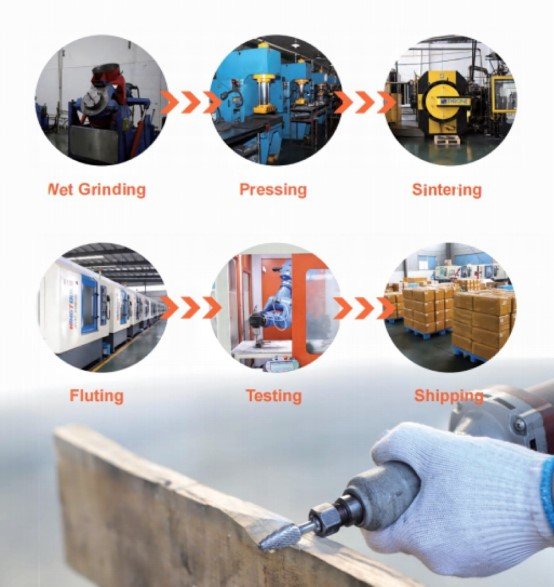
Manufacturing Process That Ensures Reliability
We control quality from raw material to final inspection. This vertical integration means consistent performance:
Raw Material Quality We source our tungsten carbide directly. No middlemen. This gives us complete control over grain size and purity. The cutting edges receive professional hardening treatment that extends working life significantly compared to standard burrs.
Welding Technology The flat-bottom solid welding method we use creates a gap-free joint between shank and cutting head. We use 50% silver-content solder that creates strong bonds at lower temperatures.[^8] This protects the carbide blank from heat damage during manufacturing.
Precision Control Each burr undergoes dimensional inspection. Our 5-axis CNC machines maintain tolerances that ensure consistent performance. The cutting flute geometry stays uniform across production runs, which means operators get predictable results.
| Quality Factor | Our Standard | Industry Average | Impact on Performance |
|---|---|---|---|
| Hardness (HRA) | 90.3-91.5 | 88.0-90.0 | 40% longer tool life |
| Welding Strength | 50% silver solder | 30% silver solder | Prevents head separation |
| Dimensional Tolerance | ±0.02mm | ±0.05mm | Consistent surface finish |
| Material Purity | 100% tungsten carbide | Mixed composition | Better wear resistance |
| Production Capacity | 25,000-30,000/day | Variable | Reliable supply chain |
The R-shape shank deserves special mention. Traditional straight shanks create stress concentration points. Our enlarged welding area distributes impact forces more evenly. This matters tremendously in automotive production where operators work quickly and tools experience significant lateral loads.
How Do You Select the Right Burr Set Configuration?
Selection mistakes waste money and time. I regularly help customers who bought inappropriate burr sets for their applications. The wrong cut type damages parts. The wrong shank size won't fit their equipment. The wrong shape cannot reach required areas.
Proper burr set selection requires matching the cut type to your material hardness, choosing shapes that access your work geometry, and confirming shank compatibility with your rotary tools. Operating speed and material removal rate also influence which configuration delivers optimal results.
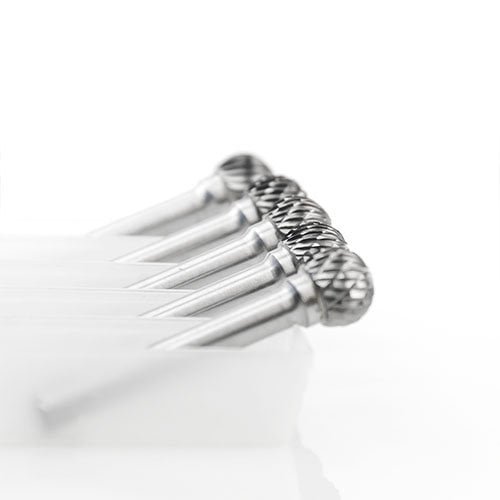
Material-Driven Selection Process
For Automotive Applications: Start with the base material. Cast iron engine blocks need single-cut burrs. Stainless steel exhaust components require double-cut or chip-breaker designs. Aluminum parts demand aluminum-cut configurations to prevent clogging and surface smearing.[^9]
For Aerospace Applications: Material hardness drives the decision. Titanium components work best with fine-cut or diamond-cut burrs that create controlled chip formation.[^10] Aluminum airframe parts need aluminum-cut designs. High-temperature alloys like Inconel require double-cut configurations for efficient material removal.
Operating Speed Considerations: Automotive production typically runs at higher speeds because the materials are softer. Aerospace work often requires slower speeds with harder materials. Our burr sets handle speeds from 5,000 to 35,000 RPM depending on the configuration and material being processed.
| Material Type | Hardness Range | Recommended Cut | Typical RPM Range | Expected Tool Life |
|---|---|---|---|---|
| Aluminum Alloys | HB 25-150 | Aluminum Cut | 15,000-35,000 | 800-1,200 parts |
| Cast Iron | HB 150-250 | Single Cut (M) | 8,000-15,000 | 600-900 parts |
| Stainless Steel | HRC 40-55 | Double Cut (MX) | 6,000-12,000 | 400-700 parts |
| Titanium | HRC 30-40 | Fine Cut (F) | 3,000-8,000 | 500-800 parts |
| Inconel | HRC 35-45 | Double Cut (MX) | 2,000-6,000 | 300-500 parts |
Shape selection depends on access requirements. Cylindrical burrs work for open surfaces. Ball shapes reach into curved recesses. Flame and tree shapes access narrow channels. Cone shapes create angled surfaces and enlarge holes.
Shank Compatibility and Tool Life
Our standard 1/4-inch shank diameter fits most industrial rotary tools. The 40Cr steel shank material provides sufficient strength for heavy-duty operations while maintaining flexibility that prevents brittle failure. Some customers request custom shank lengths for specialized applications.
Tool life varies based on application intensity. In automotive production where operators work continuously, a single burr might process 400-1,200 parts before replacement. Aerospace applications often achieve higher part counts because material removal rates are lower and operators work more carefully.
What Cost Benefits Do Professional Burr Sets Provide?
Initial cost creates hesitation. I understand this completely. Professional-grade burr sets cost more upfront than standard tools. But total cost of ownership tells a different story.
Professional carbide burr sets reduce per-part costs through extended tool life, eliminate scrap from tool failure, minimize downtime for tool changes, and deliver consistent results that reduce inspection requirements. The return on investment typically occurs within the first production run.
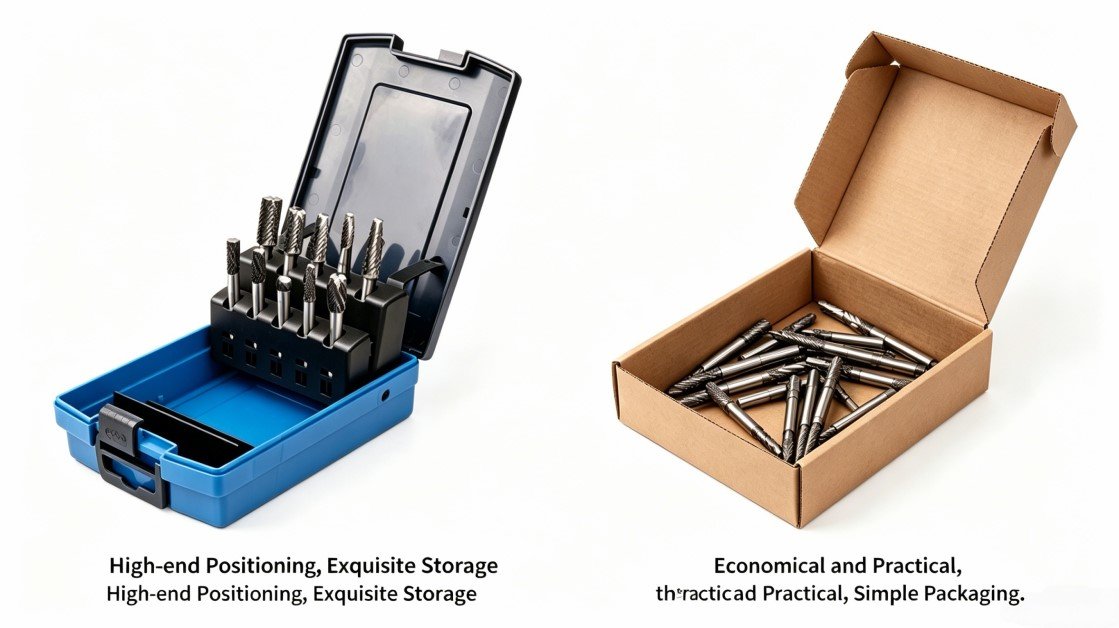
Real-World Cost Analysis
Consider a typical automotive production scenario. An operator changes standard burrs every 200 parts. Each change takes 3-5 minutes including tool inspection and adjustment. Production rates drop during the learning curve with each new tool.
Our burr sets typically last 600-1,200 parts in the same application. This means:
- 66-83% fewer tool changes
- Reduced operator downtime
- Lower inventory carrying costs
- More consistent part quality
Labor Cost Reduction Tool changes interrupt workflow. The operator stops production, removes the worn burr, installs a new one, adjusts settings, and verifies the first part. At $40-60 per hour labor costs[^11], these interruptions add up quickly.
Scrap Prevention Worn tools create defects. When a standard burr begins dulling, it generates excessive heat, creates poor surface finish, or leaves burrs on edges. Parts get rejected. Professional-grade burr sets maintain performance longer, which reduces scrap rates.
| Cost Factor | Standard Burrs | Professional Burrs | Annual Savings (1000 parts/month) |
|---|---|---|---|
| Tool Cost per Piece | $8-12 | $18-25 | - |
| Parts per Tool | 150-250 | 600-1,200 | - |
| Cost per Part (Tool) | $0.040-0.080 | $0.020-0.042 | $240-480 |
| Tool Change Time | 15-20 min/day | 4-6 min/day | $3,600-5,200 (labor) |
| Scrap Rate | 2-3% | 0.5-1% | $1,800-3,000 (parts) |
| Total Annual Savings | - | - | $5,640-8,680 |
Supply Chain Reliability
Our Korean automotive partner maintains stable monthly orders because they trust our supply consistency. We operate 418 sets of 5-axis CNC machines across three factories. Daily production capacity reaches 25,000-30,000 pieces. This means:
- No production delays from tool shortages
- Predictable procurement planning
- Reduced safety stock requirements
- Lower total inventory costs
When customers integrate our burr sets into their standard operations, they stop worrying about tool performance variability. This consistency matters tremendously in automotive and aerospace manufacturing where production schedules are tight and quality requirements are non-negotiable.
Conclusion
Burr sets transform automotive and aerospace manufacturing by delivering consistent quality, reducing production costs, and meeting strict industry standards. The right selection based on material, application, and operating parameters ensures optimal performance and return on investment.
[^1]: "[PDF] Rockwell hardness measurement of metallic materials", https://nvlpubs.nist.gov/nistpubs/Legacy/SP/nistspecialpublication960-5.pdf. Tungsten carbide hardness in the HRA 90-91 range correlates with superior wear resistance in cutting applications, though actual tool life depends on multiple factors including operating conditions and material being cut. Evidence role: mechanism; source type: research. Supports: the relationship between carbide hardness in the HRA 90-91 range and tool wear resistance. Scope note: though actual tool life depends on multiple factors including operating conditions and material being cut [^2]: "[PDF] The Formation and Properties of Machining Burrs", https://digitalcommons.usu.edu/cgi/viewcontent.cgi?referer=&httpsredir=1&article=5595&context=etd;The. Double-cut flute patterns create smaller chips and improve material evacuation compared to single-cut designs, particularly beneficial when machining materials that produce continuous chips. Evidence role: mechanism; source type: education. Supports: how double-cut flute patterns improve chip evacuation and material removal rates. [^3]: "LI09097li"", https://ntrs.nasa.gov/api/citations/19780024242/downloads/19780024242.pdf. Weight reduction in aerospace applications directly impacts fuel efficiency, payload capacity, and operational costs, with industry estimates suggesting each kilogram saved can reduce fuel consumption over an aircraft's lifetime. Evidence role: general_support; source type: government. Supports: the critical importance of weight reduction in aerospace applications. [^4]: "Fatigue Life Prediction of Machined Specimens with the ... - PMC", https://pmc.ncbi.nlm.nih.gov/articles/PMC8472297/. Surface roughness creates stress concentration points that can initiate fatigue cracks, with smoother finishes generally improving fatigue life in cyclically loaded components, though the magnitude of effect varies with material and loading conditions. Evidence role: mechanism; source type: paper. Supports: the relationship between surface finish quality and fatigue resistance in metal components. Scope note: though the magnitude of effect varies with material and loading conditions [^5]: "Investigation of the Impact of High-Speed Machining in the Milling ...", https://pmc.ncbi.nlm.nih.gov/articles/PMC10420329/. Excessive heat generation during machining can alter the microstructure of temperature-sensitive alloys like titanium and nickel-based superalloys, potentially affecting mechanical properties through phase transformations or residual stress introduction. Evidence role: mechanism; source type: research. Supports: how heat generation during machining can affect the microstructure and properties of temperature-sensitive alloys. [^6]: "Interplay of Carbon Content and Sintering Temperature on ... - PMC", https://pmc.ncbi.nlm.nih.gov/articles/PMC12195148/. Sintering temperature, time, and atmosphere control the densification and grain growth in tungsten carbide, directly affecting final hardness and mechanical properties, with typical industrial processes producing hardness in the HRA 89-92 range. Evidence role: mechanism; source type: education. Supports: how sintering parameters influence the final hardness of tungsten carbide materials. [^7]: "IM 558, Revised 4/18/17 - Iowa Department of Transportation", https://ia.iowadot.gov/erl/archiveapril2017/IM/content/558.htm. Larger bonding areas in brazed or welded tool joints distribute stress more evenly and reduce stress concentration, improving resistance to fatigue and impact loading, though the specific improvement depends on joint geometry and loading conditions. Evidence role: mechanism; source type: education. Supports: how increased joint area in tool shank connections improves stress distribution and reduces failure risk. Scope note: though the specific improvement depends on joint geometry and loading conditions [^8]: "solders and soldering (supersedes Letter Circular 701, 493 ...", https://www.govinfo.gov/content/pkg/GOVPUB-C13-0d59fddfec676b3cf77b3b0993fa741c/pdf/GOVPUB-C13-0d59fddfec676b3cf77b3b0993fa741c.pdf. Higher silver content in brazing alloys generally lowers melting temperature while maintaining good joint strength and ductility, with 50% silver alloys typically melting around 690-775°C compared to lower-silver alternatives. Evidence role: mechanism; source type: education. Supports: the relationship between silver content in brazing alloys and their melting temperature and bond strength. [^9]: "Effect of Built-Up Edge Formation during Stable State of Wear in AISI ...", https://pmc.ncbi.nlm.nih.gov/articles/PMC5706177/. Aluminum's low melting point and high thermal expansion cause chips to adhere to cutting edges at typical machining temperatures, requiring larger flute spacing and specific rake angles to prevent built-up edge formation and surface smearing. Evidence role: mechanism; source type: education. Supports: why aluminum's machining characteristics require specific tool geometries to prevent chip welding and surface defects. [^10]: "Analysis of Tool Wear in Finish Turning of Titanium Alloy Ti-6Al-4V ...", https://pmc.ncbi.nlm.nih.gov/articles/PMC11721966/. Titanium's low thermal conductivity, high chemical reactivity at elevated temperatures, and work-hardening tendency create challenges in chip formation and tool wear, requiring careful control of cutting parameters and tool geometry to prevent premature failure. Evidence role: mechanism; source type: research. Supports: the machining characteristics of titanium that necessitate specific cutting tool geometries. [^11]: "Unit labor costs, manufacturing, percent change from same quarter a ...", https://www.bls.gov/charts/productivity-and-costs/manufacturing-labor-costs-percent-change.htm. Manufacturing labor costs in the United States vary significantly by sector and region, with total compensation including wages and benefits for production workers in durable goods manufacturing, though specific rates depend on location, skill level, and industry segment. Evidence role: statistic; source type: government. Supports: typical labor cost ranges in manufacturing sectors. Scope note: though specific rates depend on location, skill level, and industry segment